

TL;DR:
- ADHD education nonprofits aim to raise awareness, provide evidence-based support, and advocate for policy change.
- Their efforts help reduce stigma, improve diagnosis, and create better educational and workplace accommodations.
An ADHD education nonprofit's mission is defined as the organized effort to educate, advocate for, and empower individuals affected by Attention-Deficit/Hyperactivity Disorder through evidence-based resources and community support. Understanding what is adhd education nonprofit mission means recognizing that these organizations do far more than distribute pamphlets. Groups like CHADD have spent over 35 years fighting for policy change at federal, state, and local levels. That sustained commitment shows you just how deep the work runs. ADHD Awearness supports this same mission by merging education with advocacy through bold apparel and relatable content that sparks real conversations.
What is an ADHD education nonprofit mission?
An ADHD education nonprofit mission centers on three pillars: awareness, education, and advocacy. Each pillar serves a distinct purpose, but together they create a system that protects and supports people with ADHD at every stage of life.
Raising awareness and fighting stigma is the most visible part of the mission. Misinformation about ADHD is widespread. People still hear that it is "just an excuse" or that children will "grow out of it." Nonprofits counter these narratives by publishing accurate, research-backed content and organizing campaigns like ADHD Awareness Month every october. That public visibility shifts cultural attitudes over time.
Providing evidence-based education is the second pillar. CHADD functions as a dual-purpose hub that connects individuals to peer support while delivering accurate healthcare navigation information. That dual role matters because a person newly diagnosed with ADHD needs both emotional connection and clinical clarity. Nonprofits fill both gaps when the healthcare system falls short.
Advocacy at every level of government rounds out the mission. This includes lobbying for better school accommodations, pushing for insurance coverage of ADHD treatments, and protecting workplace rights. The educational goals for ADHD organizations extend well beyond classrooms. They reach into courtrooms, legislative chambers, and corporate HR offices.
- Combating misinformation and disinformation that deter diagnosis and treatment
- Publishing clinical guidance and peer-reviewed educational resources
- Advocating for federal, state, and local policy changes
- Funding and promoting ADHD research
- Building peer support networks for individuals, families, and caregivers
Pro Tip: If you are new to ADHD advocacy, start by reading your state's special education laws. Nonprofits often publish plain-language summaries that make these laws accessible without a law degree.
How do ADHD education nonprofits impact individuals and communities?
The impact of a well-executed nonprofit mission for ADHD reaches far beyond the individual. It reshapes how schools teach, how employers accommodate, and how healthcare providers diagnose.

Access to accurate diagnosis is one of the most direct outcomes. When nonprofits publish clear clinical guidance and train healthcare providers, more people receive correct diagnoses earlier. Early diagnosis reduces years of confusion, misplaced shame, and ineffective treatment. That is not a small thing. For many adults, a correct diagnosis at 35 feels like finally getting the instruction manual for their own brain.
Stigma reduction is equally powerful. Nonprofits that run consistent ADHD awareness programs shift public perception over years and decades. Schools become more willing to offer accommodations. Employers become more open to flexible work arrangements. These shifts happen because organizations do the slow, unglamorous work of education at scale.
"The mission of ADHD organizations is not just to inform. It is to change the conditions that make life harder for people with ADHD. That means policy, culture, and community, all at once."
The table below shows the key areas where ADHD nonprofit missions create measurable change.
| Area of Impact | What nonprofits do | Result for individuals |
|---|---|---|
| Education | Publish evidence-based resources | Better self-understanding and advocacy |
| Healthcare | Train providers, fund research | Earlier and more accurate diagnosis |
| Policy | Lobby for accommodations and rights | Legal protections in schools and workplaces |
| Community | Build peer networks and forums | Reduced isolation and improved mental health |
| Stigma | Run awareness campaigns | Greater social acceptance and understanding |
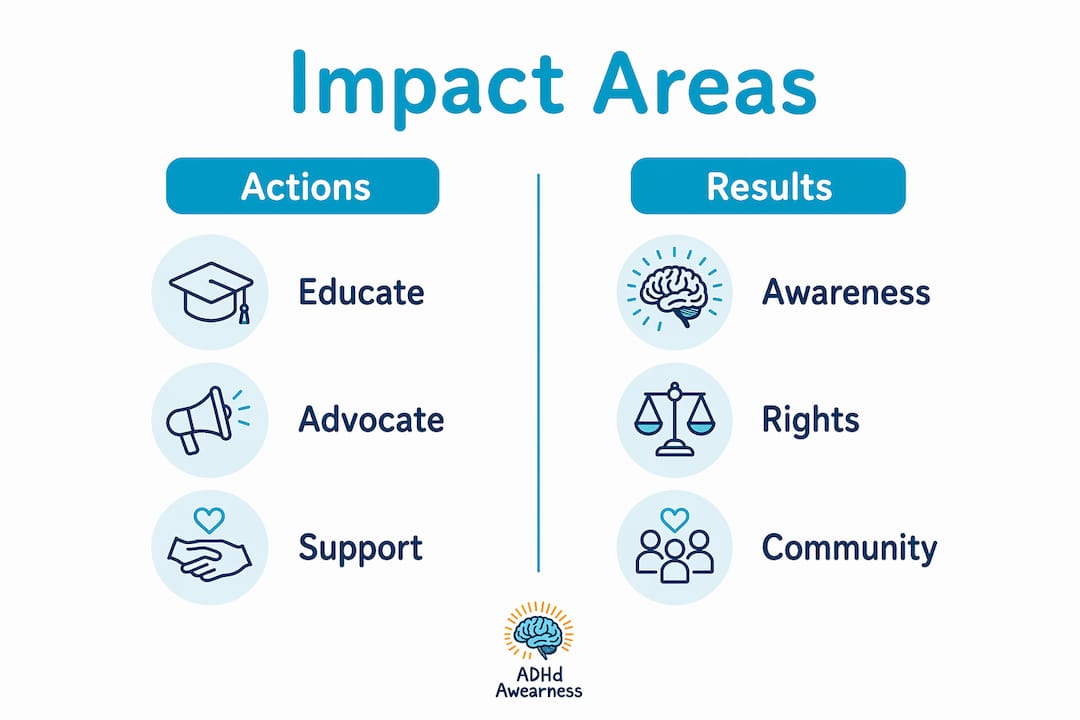
CHADD's network provides forums for education, peer support, and access to current research on ADHD treatments for its members. That combination of community and clinical information is what makes the model effective. You cannot separate the emotional support from the factual education. People need both to act on what they learn.
What challenges do ADHD nonprofits face in fulfilling their missions?
Every ADHD advocacy nonprofit operates against real headwinds. Understanding these challenges helps you appreciate why community support matters so much.
Misinformation is the most persistent obstacle. Nonprofits must actively counter both misinformation and disinformation that deter transformative ADHD diagnosis and treatment. The difference matters: misinformation spreads without intent, while disinformation is deliberate. Both cause harm. A parent who reads a viral post claiming ADHD medication causes addiction may delay their child's treatment for years.
Funding is a constant pressure. Private ADHD foundations have exceeded $100,000 in fundraising to support clinical practice guidance and awareness campaigns. That figure sounds significant, but developing and distributing clinical guidance at a national scale costs far more. Nonprofits must continuously fundraise just to maintain existing programs, let alone expand them.
Coalition building is a challenge that rarely gets discussed openly. Small organizations cannot move federal policy alone. Coalitions like the Mental Health Liaison Group amplify ADHD nonprofits' influence on federal policy in ways that isolated organizations simply cannot achieve. Joining a coalition means sharing credit and sometimes compromising on priorities. That is a real organizational tension.
- Countering viral misinformation faster than it spreads
- Sustaining funding for research and clinical guidance
- Maintaining volunteer engagement over the long term
- Navigating complex healthcare and education bureaucracies
- Building trust with communities that have been underserved or misdiagnosed
Pro Tip: When evaluating an ADHD nonprofit to support, check whether it publishes its funding sources and clinical references openly. Transparency in both areas signals a trustworthy organization.
How can you engage with and support ADHD nonprofit missions?
Supporting the mission of ADHD organizations does not require a law degree or a large donation. Practical engagement takes many forms, and each one adds real weight to the collective effort.
- Join a nonprofit membership. Organizations like CHADD offer memberships that give you access to policy updates, advocacy alerts, and educational resources. Membership fees directly fund the programs you benefit from.
- Participate in ADHD Awareness Month. Every october, nonprofits run coordinated campaigns that need volunteers, social media amplification, and community presence. Showing up, even digitally, multiplies the reach of these efforts.
- Volunteer with local chapters or advocacy initiatives. Many nonprofits rely on advocacy volunteers to staff events, run support groups, and organize outreach. Local involvement creates the grassroots foundation that national campaigns depend on.
- Use advocacy software tools. Software-driven advocacy tools lower the barrier for individuals to send targeted action alerts to their representatives. You do not need to write a letter from scratch. These tools guide you through the process in minutes.
- Donate to advance research and education. Even small, recurring donations help nonprofits plan long-term programs. Designating a gift toward clinical guidance development or awareness campaigns gives your contribution a specific purpose.
- Wear and share the message. Physical advocacy, like wearing ADHD awareness apparel, starts conversations in spaces where formal advocacy cannot reach. A T-shirt at a school pickup line or a workplace meeting opens doors that a policy brief never could.
The most underrated form of engagement is simply talking about ADHD accurately in your own community. When you correct a misconception at a family dinner or share a well-sourced article, you extend the nonprofit mission into spaces organizations cannot directly access. That ripple effect is real, and it compounds over time. You can also explore ADHD support resources to deepen your own understanding before advocating for others.
Why mission clarity is the real engine of ADHD advocacy
I have watched ADHD advocacy evolve for years, and the organizations that create lasting change share one trait: they know exactly what they are trying to do and why. Mission clarity is not a branding exercise. It is the operational foundation that determines which programs get funded, which coalitions get joined, and which battles get fought.
What I find most compelling is the shift from awareness to action. Early ADHD advocacy was largely about getting people to believe ADHD was real. That fight is not over, but the frontier has moved. The most effective organizations now focus on systemic change, pushing for insurance parity, school accommodation mandates, and workplace protections. That requires a mission statement precise enough to guide legislative strategy.
The organizations I respect most treat education and advocacy as inseparable. You cannot advocate effectively for something you do not understand deeply. And you cannot educate people toward change without giving them tools to act. The top ADHD charities doing this well combine clinical credibility with grassroots energy. That combination is rare and worth supporting.
My honest encouragement to you: do not stay a passive consumer of ADHD information. The mission of every ADHD education nonprofit depends on people like you choosing to participate, not just read. Your voice in a school board meeting or a legislative hearing carries weight that no national organization can replicate from a distance.
— Bruce
ADHD Awearness: wear the mission, fund the work
ADHD Awearness was built on the belief that advocacy should be visible and accessible every single day. Every purchase from the ADHD Awearness store supports ADHD-focused nonprofits directly, because a portion of each sale goes toward the organizations doing this work on the ground.
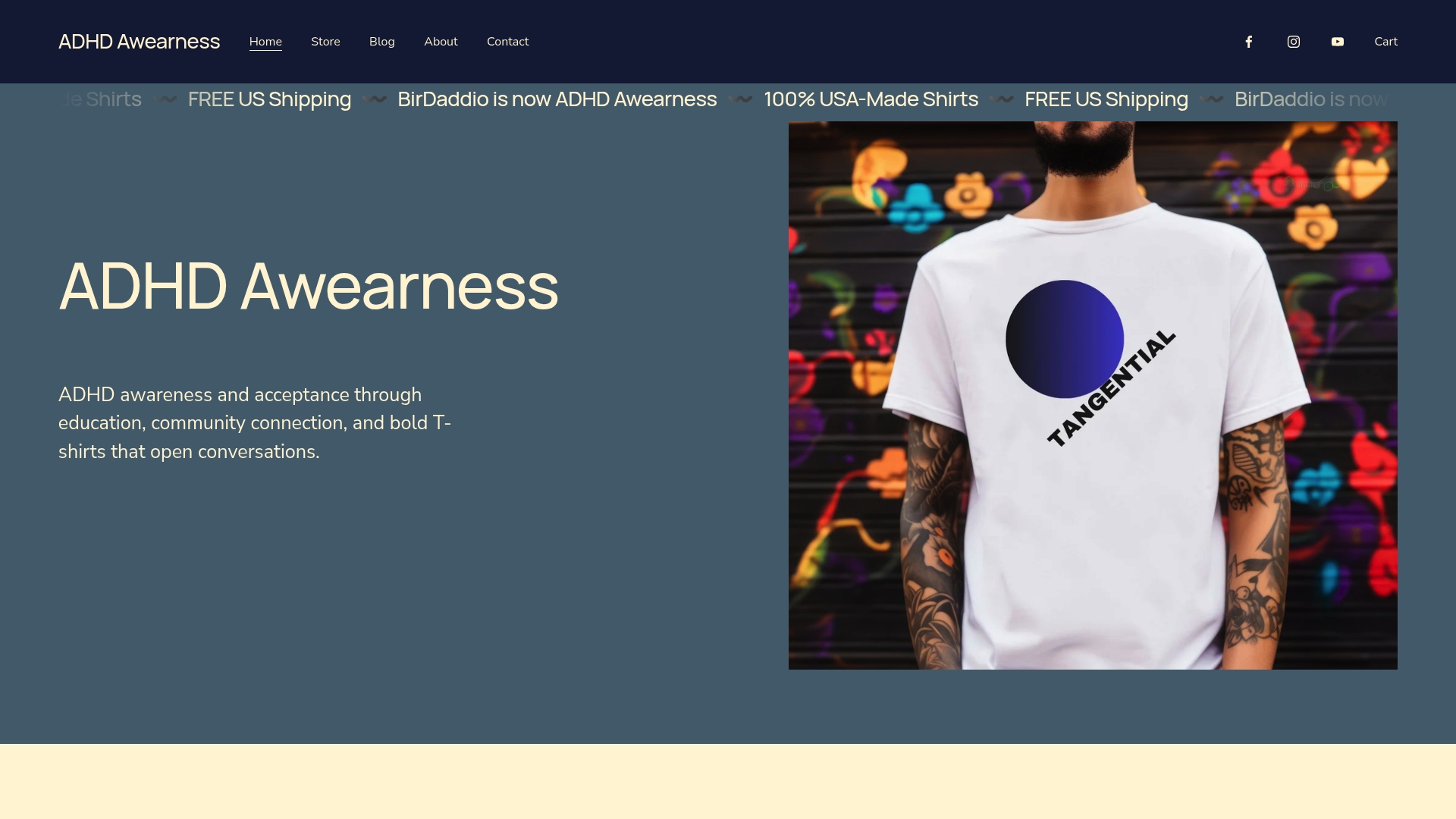
The Hyperfocus #2 shirt is one of the most popular pieces in the collection, celebrating a trait that too often gets framed as a problem. Each item is 100% USA-made and designed to start conversations. If you want to carry the mission into your daily life, the full ADHD Awearness store offers apparel that does exactly that. Shopping here is one of the most direct ways to fund the education and advocacy work this article describes.
FAQ
What is the core mission of an ADHD education nonprofit?
An ADHD education nonprofit's mission is to provide evidence-based education, reduce stigma, and advocate for the rights and well-being of individuals with ADHD through community support and policy engagement. Organizations like CHADD have pursued this mission at federal, state, and local levels for over 35 years.
How does CHADD support the ADHD nonprofit mission?
CHADD serves as a hub connecting individuals to peer support networks, publishing current ADHD research, and facilitating education for members, families, and healthcare providers. It also joins coalitions like the Mental Health Liaison Group to amplify its influence on federal policy.
Why do ADHD nonprofits focus so heavily on combating misinformation?
Misinformation and disinformation actively deter people from seeking ADHD diagnosis and treatment, making accurate clinical guidance a core mission priority. Effective combat against misinformation requires clear, consistent community outreach backed by clinical evidence.
How can I personally support an ADHD education nonprofit's mission?
You can join a nonprofit membership, volunteer with local chapters, participate in ADHD Awareness Month campaigns, and use advocacy software tools to contact your legislators directly. Wearing ADHD awareness apparel also extends the mission into everyday social spaces.
What makes a compelling ADHD nonprofit mission statement?
A compelling ADHD nonprofit mission statement names a specific population, defines a clear goal such as education or policy change, and connects individual empowerment to systemic impact. Mission clarity drives stronger donor support, volunteer engagement, and legislative influence.