
TL;DR:
- Recruiting ADHD advocacy volunteers involves clear role definition, preparation, and a structured onboarding process.
- Most roles require only 2 to 4 hours weekly, making advocacy accessible for diverse commitments.
Recruiting ADHD advocacy volunteers is defined as the structured process of identifying, onboarding, and supporting individuals who contribute their time and skills to advance ADHD awareness and community support. Done well, this process transforms passionate people into effective advocates who shift public understanding of ADHD. Most volunteer roles require just 2–4 hours per week, making advocacy accessible to people with full-time jobs, caregiving responsibilities, or ADHD themselves. This recruit ADHD advocacy volunteers guide covers every stage, from role clarity and prerequisites to onboarding, common challenges, and best practices for lasting impact.
What are the key prerequisites for recruiting ADHD advocacy volunteers?
Strong ADHD volunteer recruitment starts before you post a single opportunity. Organizations that skip the preparation stage end up with mismatched volunteers, unclear expectations, and high turnover.
The first step is defining your roles clearly. ADHD advocacy covers a wide range of functions, and not every role requires the same background. Peer support facilitation demands lived experience with ADHD, either personally or within a close family member's life. Content creation, media relations, and business case design, by contrast, prioritize professional skills over personal diagnosis. Recognizing this distinction prevents you from screening out talented contributors who don't fit a one-size-fits-all profile.
Here is a quick reference for common volunteer roles:
| Role | Time Commitment | Key Requirement |
|---|---|---|
| Peer support facilitator | 2–4 hours/week | Lived ADHD experience |
| Content writer | 2–4 hours/week | Writing or communications skills |
| Advocacy intern | Up to 2 days/week for up to 12 months | Professional expertise or student placement |
| Social media coordinator | 2–3 hours/week | Digital media skills |
| Policy researcher | Flexible, project-based | Research or policy background |
Before recruitment opens, organizations also need three core materials ready: a clear volunteer application form, a volunteer portal or hub account setup process, and a structured onboarding plan. Volunteer onboarding typically includes an online application, account creation in a volunteer management system, and an introductory meeting lasting 30–60 minutes. That meeting is where role alignment happens, so it deserves real preparation, not a casual chat.
- Write a role description that lists specific tasks, not vague duties
- State the weekly time commitment in hours, not "flexible"
- Clarify whether lived ADHD experience is required or preferred
- Confirm whether the role is remote, in-person, or hybrid
- Describe what training or onboarding the volunteer will receive
Pro Tip: Transparency about skills and availability matters more than waiting until you feel expert enough. Encourage applicants to describe what they can realistically offer, not what they think you want to hear.
How do you plan and execute the volunteer recruitment process?
A well-run recruitment process follows a predictable sequence. Skipping steps creates confusion and wastes everyone's time.

Step 1: Publish the opportunity. Post your role description on your organization's website, newsletter, and social channels. Be specific about the role, the time commitment, and the application deadline.
Step 2: Accept and review applications. Use a simple application form that asks for relevant experience, availability, and motivation. Avoid lengthy forms that create unnecessary barriers for neurodiverse applicants.
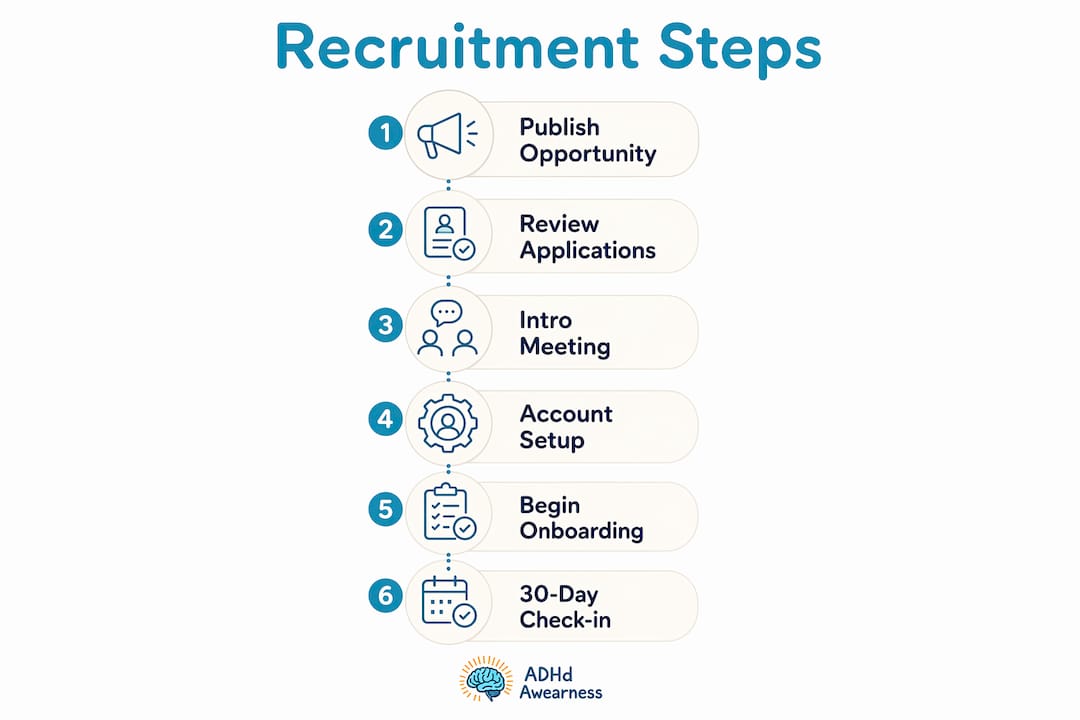
Step 3: Schedule the introductory meeting. This 30–60 minute conversation confirms role fit, sets expectations, and gives the candidate a chance to ask questions. Keep it structured but warm.
Step 4: Complete account setup. Walk new volunteers through your volunteer portal or hub so they know where to find resources, submit work, and communicate with the team.
Step 5: Begin onboarding. Provide a clear first-week plan. Ambiguity is the fastest way to lose a motivated volunteer before they contribute anything meaningful.
Step 6: Check in at 30 days. A brief check-in at the one-month mark catches problems early and signals that you value the volunteer's experience.
Recruitment timing matters more than most organizations realize. Volunteer recruitment drives tend to cluster around autumn and ahead of ADHD awareness months, particularly October, which is ADHD Awareness Month in the United States. That seasonal pattern means your pipeline can run dry at other times of year. Subscribing volunteers and prospective advocates to your newsletter is the most reliable way to keep them informed when new opportunities open.
Pro Tip: Clear communication and manageable commitments are the two factors most likely to keep volunteers engaged past the first month. If a role starts to expand beyond the original scope, renegotiate openly rather than letting the volunteer absorb extra work silently.
What challenges arise when recruiting ADHD advocacy volunteers?
Recruiting neurodiverse volunteers brings specific challenges that standard volunteer management guides rarely address. Acknowledging them directly makes your program stronger.
Varied skill levels create uneven workloads. Some volunteers arrive with years of professional experience. Others bring raw enthusiasm and lived experience but need more guidance. Assigning tasks without assessing readiness leads to frustration on both sides. A brief skills inventory during onboarding prevents this.
Overcommitment is a real risk. People with ADHD often say yes enthusiastically and then struggle when executive function demands pile up. Organizations that accommodate neurodiverse volunteers with flexible deadlines, clear task breakdowns, and regular check-ins see significantly better retention than those that apply rigid structures.
Burnout happens faster than expected. Advocacy work is emotionally heavy. Volunteers who share their personal ADHD stories repeatedly, without adequate support, can experience compassion fatigue. Build in recovery time and rotate high-intensity roles.
"Volunteers often integrate more successfully after attending peer support sessions as participants first. That experience builds cultural understanding and makes role fit assessment far more accurate." — Volunteer Onboarding at ADHD Aware
This insight points to a practical solution. Before formally recruiting peer support facilitators, invite candidates to attend a few sessions as community members. They gain context. You gain a clearer picture of their interpersonal skills and emotional readiness. Both sides make a better decision.
Ongoing training is not optional. Volunteers who receive regular skill development opportunities stay longer and contribute more. Even a monthly 30-minute group call with shared resources counts as meaningful support. The organizations that treat training as a one-time onboarding event consistently lose volunteers within three months.
Best practices for maximizing the impact of ADHD advocacy volunteers
The most effective ADHD advocacy programs treat volunteers as partners, not free labor. That shift in mindset changes everything about how you recruit, support, and retain people.
Skills-based volunteering is the gold standard. Aligning volunteers' skills to organizational needs produces better outcomes for the organization and deeper satisfaction for the volunteer. A volunteer with a background in graphic design contributes more in a visual communications role than in a data entry task. A former teacher brings natural strengths to peer education. Matching people to roles that fit their strengths is not just kind. It is effective.
Volunteers also grow through their service. People who take on facilitation roles develop public speaking confidence. Those who handle media relations build professional networks. Ongoing engagement with decision-makers sharpens their ability to translate lived ADHD experience into evidence-based recommendations that actually influence policy and programs. That two-way benefit is the strongest argument for investing in volunteer development.
Here are the volunteer roles that consistently generate the most organizational impact:
- Content creation: Blog posts, social media, and educational materials that reach thousands of people
- Peer support facilitation: Direct community support that reduces isolation for people with ADHD
- Policy and advocacy research: Evidence gathering that informs organizational positions and public submissions
- Event coordination: Awareness campaigns, fundraisers, and community events that build visibility
- Mentorship: Pairing experienced volunteers with newer ones to accelerate skill development
Pro Tip: Measuring campaign impact helps you show volunteers that their work matters. Share concrete results, like reach statistics, policy changes, or community feedback, so volunteers see the difference they are making.
The organizations that sustain strong volunteer programs share one habit: they celebrate contributions publicly and specifically. A generic "thank you" fades fast. Naming what a volunteer did and why it mattered creates a sense of belonging that keeps people coming back.
What I've learned about building ADHD advocacy volunteer programs that actually work
After spending years watching advocacy organizations recruit volunteers with great intentions and lose them within months, I've come to one clear conclusion. The problem is almost never the volunteers. It's the systems around them.
The most common mistake I see is treating lived ADHD experience as a nice-to-have rather than a core asset. Organizations that genuinely center lived experience in their volunteer programs produce advocacy that resonates with the ADHD community in ways that professionally polished but personally distant campaigns simply cannot match. There is a credibility that comes from someone saying "I know what this feels like" that no amount of research can replicate.
I've also noticed that the volunteers who stay longest are the ones who felt seen from the very first conversation. That introductory meeting is not an administrative step. It's the moment a person decides whether this organization respects their time, their neurodiversity, and their contribution. Get that meeting right, and you've earned a committed advocate. Rush through it, and you've lost them before they started.
The other thing I'd push back on is the idea that you need a large, formal program to make an impact. Some of the most effective ADHD advocacy work I've seen came from small, tightly knit volunteer groups where everyone knew their role, felt supported, and had direct access to leadership. Scale matters less than clarity and care.
— Jason
ADHD Awearness and the volunteer community
ADHD Awearness was built on the belief that awareness starts with people, not just platforms. The brand's educational content, community resources, and USA-made advocacy apparel all exist to support the same goal: reducing stigma and building genuine understanding of ADHD.
If you are ready to get involved, visit ADHD Awearness to explore current volunteer opportunities and community resources. Every purchase from the store also supports ADHD-focused nonprofits directly, so even browsing the ADHD Abilities Collection is a way to contribute. Subscribe to the newsletter to stay informed about seasonal recruitment drives and new advocacy programs as they open.
FAQ
What time commitment do ADHD advocacy volunteer roles typically require?
Most ADHD advocacy volunteer roles require 2–4 hours per week. Specialized internship roles may require up to two days per week for periods of up to 12 months.
Do I need an ADHD diagnosis to volunteer in advocacy?
Not always. Peer support roles require lived experience with ADHD, either personally or through a close family member. Content creation, research, and coordination roles prioritize professional skills over personal diagnosis.
What does the volunteer onboarding process look like?
Onboarding typically involves three steps: submitting an online application, creating a volunteer portal account, and completing a 30–60 minute introductory meeting for role alignment. Most organizations conduct this process remotely at no cost to the volunteer.
When do most ADHD advocacy organizations recruit volunteers?
Recruitment drives tend to happen in autumn and ahead of ADHD Awareness Month in october. Subscribing to an organization's newsletter is the most reliable way to hear about openings as they arise.
What if I don't feel experienced enough to volunteer?
A willingness to learn and a consistent small weekly commitment matter more than prior expertise in most volunteer roles. Being transparent about your current skills and available time is more effective than waiting until you feel fully ready.