
TL;DR:
- Trustworthy ADHD charities prioritize transparency, financial clarity, and active coalition participation. They primarily support through programs, research funding, advocacy, and accessible educational resources. Families can verify legitimacy by reviewing public filings, program expenses, and avoiding organizations with vague claims or outdated IRS filings.
An ADHD charity is a nonprofit organization dedicated to supporting individuals with attention deficit hyperactivity disorder through education, advocacy, community resources, and evidence-based programs. The three largest national players are CHADD, ADDA, and APSARD, each serving distinct segments of the ADHD community. The CDC funds the National Resource Center on ADHD operated by CHADD, making free, evidence-based public resources available to anyone who needs them. Knowing which organizations to trust, and why, makes all the difference when you are searching for real support.
What makes a trustworthy ADHD charity?
Transparency is the strongest signal of a credible ADHD nonprofit, more reliable than any marketing or website design. Financial expert Anh Tran confirms that transparency and financial clarity are the truest measures of legitimacy, and warns against organizations that use pressure tactics to solicit donations. You deserve to know exactly where your money goes before you give it.
Three criteria separate trustworthy organizations from questionable ones:
- Program Expense Ratio: A ratio of 75% or higher means the organization spends most of its funds on actual programs, not overhead. Any organization below that threshold warrants a closer look.
- Public filings: Legitimate charities publish annual reports and Form 990 filings that show income, expenses, and board composition. If those documents are hard to find, treat that as a warning sign.
- Coalition participation: Organizations that participate in coalitions like ADHD Awareness Month signal a commitment to credibility and counter-misinformation efforts. Isolation from the broader advocacy community is a red flag.
Watch out for charities with no recent IRS 990 filings or names that mimic established organizations. Checking an organization's Employer Identification Number against the IRS database takes five minutes and can prevent a costly mistake.
Pro Tip: Search any charity's EIN on the IRS Tax Exempt Organization Search tool before donating. A legitimate 501(c)(3) will appear with current filing status.
Top 10 ADHD charities in the US for support, education, and advocacy
1. CHADD (Children and Adults with ADHD)
CHADD is the largest ADHD nonprofit in the United States, serving both children and adults. It provides support networks, educational materials, and advocacy while publishing up-to-date information on research and treatments. CHADD also operates the National Resource Center on ADHD, which the CDC funds directly. That federal backing gives CHADD's resources a level of scientific rigor that few other organizations match.

2. ADDA (Attention Deficit Disorder Association)
ADDA focuses specifically on adult ADHD, a population that often gets overlooked in broader conversations about the condition. The organization offers training, virtual support groups, and advocacy for improved adult care. Adults with ADHD frequently struggle to find resources designed for their life stage, and ADDA fills that gap directly.
3. APSARD (American Professional Society of ADHD and Related Disorders)
APSARD takes a clinical and research-centered approach to ADHD support. It promotes ADHD research and clinical communication to improve lifelong care for individuals with the condition. Families who want access to the latest clinical findings, rather than general wellness content, will find APSARD especially useful.
4. The ADHD Awareness Month Coalition
The ADHD Awareness Month Coalition brings together dozens of organizations each october to spread accurate information about ADHD. Coalition participation strengthens the credibility of every member organization by holding them to shared standards. If a charity you are considering belongs to this coalition, that membership is a meaningful endorsement.
5. National Alliance on Mental Illness (NAMI)
NAMI is not exclusively an ADHD organization, but it provides substantial resources for people with ADHD and co-occurring conditions like anxiety and depression. Its helpline, peer support groups, and family education programs are available in communities across all 50 states. For families navigating multiple diagnoses at once, NAMI offers a breadth of support that specialized ADHD nonprofits may not cover.
6. The Arc
The Arc advocates for people with intellectual and developmental disabilities, including many individuals with ADHD who also have co-occurring conditions. Its network of local chapters means that support is often available at the neighborhood level, not just nationally. Families who need help navigating school systems, housing, or employment will find The Arc's advocacy particularly practical.
7. Federation of Families for Children's Mental Health
This organization centers the voices of families, not just clinicians, in shaping mental health policy and programs. It provides peer support and educational resources that help parents advocate effectively for their children in school and healthcare settings. Parents who feel unheard in clinical environments often find a stronger voice through family-led organizations like this one.
8. Child Mind Institute
The Child Mind Institute produces clinically reviewed educational content on ADHD, anxiety, and learning differences. Its online library is one of the most thorough free resources available to parents and educators seeking evidence-based guidance. The Institute also runs direct clinical services, making it both an advocacy organization and a care provider.
9. Understood.org
Understood.org serves families of children with learning and attention differences, including ADHD. Its content is written in plain language and covers everything from classroom accommodations to explaining an ADHD diagnosis to your child. The platform also connects families with peer communities, which reduces the isolation that often accompanies a new diagnosis.
10. ADHD Awearness
ADHD Awearness takes a different approach to nonprofit support. Rather than operating as a traditional grant-making organization, it builds awareness through educational content, bold apparel, and community engagement. A portion of every sale of its 100% USA-made apparel goes directly to ADHD-focused nonprofits. That model lets everyday supporters contribute to the cause simply by wearing their values, which makes advocacy accessible to people who may not have time to volunteer or funds to donate separately.
Types of programs ADHD charities typically provide
ADHD nonprofits deliver support across four broad program categories, and understanding those categories helps you match an organization to your actual needs.
- Peer support and helplines: Many organizations run telephone helplines and virtual support groups staffed by trained volunteers or professionals. These are often the fastest way to get real-time guidance during a crisis or at the moment of a new diagnosis.
- Educational materials: Charities produce guides for parents, educators, and adults covering topics from classroom behavior to medication management. Resources like ADHD classroom behavior guides help teachers understand what ADHD actually looks like in a learning environment.
- Advocacy campaigns: Organizations lobby for policy changes, run public awareness campaigns, and participate in coalitions to shift how society understands ADHD. Advocacy work is slower than direct service, but it changes the conditions that make daily life harder for people with ADHD.
- Research funding and dissemination: Some charities fund original research or translate clinical findings into plain-language summaries. That work shortens the gap between what scientists discover and what families actually hear from their doctors.
Pro Tip: When evaluating a charity's programs, ask specifically what percentage of participants report measurable improvement. Organizations that track outcomes are more accountable than those that only count participation numbers.
How donors and families can engage beyond donations
Financial contributions matter, but volunteering and advocacy participation create impact that money alone cannot buy. Here are the most effective ways to get involved:
- Join a support group: Most major ADHD charities offer free or low-cost peer groups. Attending regularly builds community and gives you direct access to people who understand your experience.
- Volunteer for advocacy: Organizations like CHADD and ADDA recruit volunteers to contact legislators, attend hearings, and share personal stories. You can find practical guidance on advocacy volunteering to get started without prior experience.
- Participate in awareness events: ADHD Awareness Month in october is the single largest annual opportunity to spread accurate information. Wearing awareness apparel, sharing social media content, and attending local events all contribute to shifting public perception.
- Use educational resources professionally: Teachers, counselors, and healthcare workers can bring charity-produced materials into their workplaces. That kind of institutional adoption multiplies the reach of any single resource far beyond its original audience.
What I have learned about choosing ADHD charities that actually help
After spending years watching families navigate the ADHD support landscape, I have come to one firm conclusion: the organizations that help the most are rarely the ones with the biggest marketing budgets. The charities that change lives are the ones that publish their Form 990s without being asked, that measure outcomes instead of just counting participants, and that show up in coalitions alongside other credible organizations.
I have also seen families get burned by organizations with impressive websites and vague missions. A polished homepage is not evidence of impact. A published annual report is. If a charity cannot tell you what percentage of its budget goes to programs, that silence is your answer.
My honest advice is to start with CHADD or ADDA for direct support, then look at smaller local nonprofits for community connection. Use the Program Expense Ratio as your first filter, not your last. And do not underestimate the value of organizations like ADHD Awearness that build awareness through everyday actions. Changing how the public understands ADHD is just as important as funding research, and sometimes a conversation started by a T-shirt reaches someone that a clinical brochure never would.
The ADHD community deserves organizations that are honest, accountable, and genuinely invested in the people they serve. Those organizations exist. You just have to know how to find them.
— Bruce
ADHD Awearness: awareness you can wear every day
ADHD Awearness was built on the belief that education and community go hand in hand. Through blogs, videos, podcasts, and bold USA-made apparel, it gives individuals and families real tools for understanding and talking about ADHD.
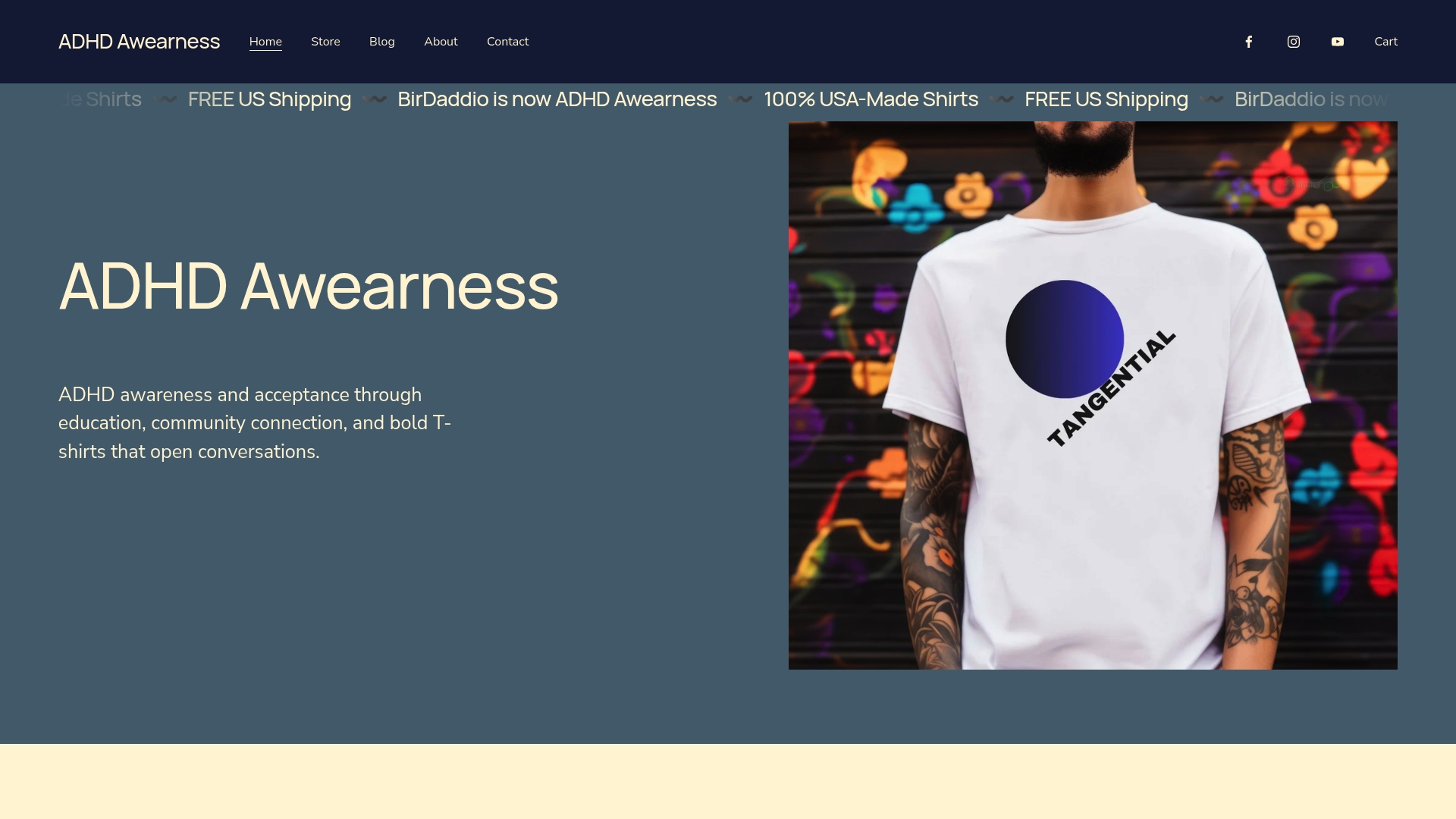
Every purchase from the ADHD Awearness store contributes a portion of the sale to ADHD-focused nonprofits, so your support goes further than your wardrobe. The ADHD Abilities Collection is a strong starting point if you want apparel that sparks real conversations about neurodiversity. Visit ADHD Awearness to see how awareness, education, and community come together in one place.
FAQ
What does an ADHD charity actually do?
An ADHD charity provides education, peer support, advocacy, and research resources to individuals and families affected by ADHD. Most established organizations also work to influence public policy and counter misinformation about the condition.
How do I know if an ADHD nonprofit is legitimate?
Check for a published Form 990, a Program Expense Ratio of 75% or higher, and active IRS 501(c)(3) status. Legitimate charities make these documents publicly available without requiring a request.
Is CHADD the best ADHD charity for families?
CHADD is the largest U.S. ADHD nonprofit and operates the CDC-funded National Resource Center on ADHD, making it a strong first resource for families. Adults seeking peer-specific support may find ADDA a better fit for their needs.
Can I support ADHD charities without donating money?
Volunteering, attending advocacy events, and sharing educational resources all create meaningful impact beyond financial contributions. Organizations like ADHD Awearness also let supporters contribute through everyday purchases of awareness apparel.
What is ADHD Awareness Month and why does it matter?
ADHD Awareness Month takes place each october and is coordinated by a coalition of leading ADHD nonprofits. It is the largest annual effort to spread accurate, evidence-based information about ADHD to the general public.