
TL;DR:
- A strong ADHD resource hub offers reliable information, practical tools, and active community support in one platform. These hubs include online communities, AI-powered planning tools, advocacy resources, and lived experience content to help users manage daily challenges effectively. The most helpful platforms translate knowledge into actionable steps and foster identity, capability, and community.
An ADHD resource hub is defined as an integrated online platform that combines tools, information, and community support in one accessible place. The best ADHD resource hub examples go far beyond a list of articles. They offer peer communities, AI-powered planning tools, legal advocacy guides, and lived experience content that validates what you feel every day. Organizations like CHADD and standards like the Americans with Disabilities Act (ADA) have shaped what quality ADHD support looks like online. Whether you are a parent, an educator, or someone living with ADHD, knowing which hubs deliver real value saves you time and frustration.

1. What makes a strong ADHD resource hub?
A strong ADHD resource hub combines three elements: reliable information, practical tools, and a real community. Without all three, the platform serves only part of your need. A hub that only publishes articles leaves you without support when you hit a wall at 2:00 PM trying to start a task. One that only offers community without expert content can spread misinformation.
The best hubs are also free to access or offer meaningful free tiers. Inclusivity matters too. A platform built only for adults misses parents of newly diagnosed children, and a hub designed only for children misses the millions of adults who were never diagnosed until their 30s or 40s. Accessibility, depth, and community are the three benchmarks worth measuring every hub against.
2. Top ADHD online communities with real engagement
The r/ADHD subreddit is the largest single ADHD community online, with over 1.2 million members. That scale means you will almost always find someone who has faced the exact situation you are dealing with right now. The subreddit also links out to specialized subgroups covering topics like ADHD and relationships, ADHD and women, and late diagnosis experiences.
Discord servers offer something Reddit cannot: real-time voice support. The ADHD Dopamine Discord server, for example, runs 50+ channels including voice rooms for body doubling, which is the practice of working alongside another person to stay on task. Body doubling is one of the most effective low-tech tools for ADHD, and having a live community that facilitates it daily is genuinely useful.
Niche communities organized by life role or age group reduce the social friction that many people with ADHD experience in large, general spaces. Specialized sections for 30+ adults and parents let you connect with people whose daily challenges mirror yours. That specificity reduces sensory overload and makes it easier to actually participate.
- r/ADHD: 1.2M+ members, peer support, and links to subgroups by identity and life stage
- ADHD Dopamine Discord: 7,209 members, 50+ channels, voice body doubling rooms
- Age-segmented communities: Groups for parents, adults 30+, and late-diagnosed individuals
Pro Tip: When joining a new ADHD community, spend one week reading before posting. You will learn the culture, find the most helpful members, and avoid repeating questions that get answered daily.
You can also find parent-focused support groups that connect caregivers with others navigating school systems, medication decisions, and daily routines.
3. Innovative tool hubs that address executive dysfunction directly
The most effective ADHD tool hubs do not just describe executive dysfunction. They build tools that work around it. Platforms like FOCO offer 45+ deep-dive guides alongside AI-powered task-breakdown engines and focus timers that run in 5–30 minute intervals. That range matters because a 25-minute Pomodoro session is too long for someone in a dysregulated state, but a 5-minute sprint is manageable.
AI features like task chunking, voice-first planning, and context-aware reminders directly target the two biggest ADHD obstacles: starting tasks and remembering what comes next. Voice braindump tools let you speak your thoughts out loud and have them organized automatically. That removes the executive function cost of writing things down, which for many people with ADHD is the step that never happens.
Active tools like AI planners and voice braindumps consistently outperform static article libraries for people with ADHD. Reading about time management is very different from having a tool that actually manages your time with you. The distinction is the difference between information and support.
- AI task-breakdown engines: Break large projects into steps sized for ADHD attention spans
- Focus timers (5–30 minute intervals): Match session length to current regulation state
- Voice-first planning tools: Remove the writing barrier from daily planning
- Context-aware reminders: Trigger at the right moment, not just at a set clock time
Pro Tip: Set your focus timer to its shortest interval on hard days. Five minutes of real work beats zero minutes of planning to work.
For practical guidance on building accountability into your daily routine, the ADHD accountability partnership model pairs well with any tool hub you choose.
4. Advocacy and legal resource hubs that build self-advocacy skills
ADHD advocacy, in its formal sense, means using established legal frameworks to secure accommodations and support. The ADA protects people with ADHD at employers with 15 or more employees, requiring reasonable workplace accommodations. IDEA and Section 504 plans cover students in public schools. Knowing which law applies to your situation is the first step in any advocacy effort.
The most effective self-advocacy reframes the request. Instead of asking for a disability accommodation, you frame the need as job-outcome or learning-outcome support. Framing needs as functional job support increases compliance from employers and schools because it connects the accommodation to a result they already care about. This is not a trick. It is a communication strategy that works.
Peer self-advocacy training programs, including those developed by organizations like ASAN, improve navigation of medical and benefit systems and produce measurable empowerment outcomes. Resource hubs that offer templates, scripts, and training for these conversations give you something you can use the next morning.
| Advocacy context | Relevant law or standard | What you can request |
|---|---|---|
| Workplace | ADA (15+ employees) | Extended deadlines, quiet workspace, flexible hours |
| K-12 education | IDEA / Section 504 | IEP, extended test time, preferential seating |
| Higher education | Section 504 / ADA | Disability services, note-taking support, exam accommodations |
Learning to communicate your needs clearly is the practical skill that makes every legal protection actually usable.
5. Curated information hubs that blend research with lived experience
The strongest information hubs combine evidence-based content with personal storytelling. CHADD, one of the most established ADHD organizations in the United States, publishes research summaries, symptom checklists, and policy updates alongside personal accounts from people living with ADHD. That combination matters because research tells you what is true, and lived experience tells you what it actually feels like.
True collaboration among parents, schools, and professionals is what protects students with ADHD when policy shifts. Hubs that facilitate that collaboration by publishing policy updates alongside parent guides serve the whole ecosystem, not just one audience. Psych Central takes a similar approach, pairing clinical explanations with first-person essays that validate the emotional weight of living with ADHD.
Neurodiversity education advocates like Laurie Faulkner have shown that translating complex tools into accessible content dramatically increases adoption and real-world impact. The lesson for resource hubs is clear: expert content only works if it is written for the person who needs it, not for the clinician who already knows it.
"Connection beats virality. The ADHD community does not need more content. It needs honest content that makes people feel less alone."
Reflecting the insight shared by ADHD content creators on authentic community building
For educators looking to understand how ADHD shows up in the classroom, ADHD classroom behavior explained is a practical starting point that bridges research and daily reality.
What I have learned about choosing the right ADHD hub
After spending years watching people search for ADHD support, I have noticed one consistent pattern. People find a hub, read everything on it, and then stop. The information does not translate into change because the hub never gave them a tool or a community to practice with. Information alone does not move the needle on executive dysfunction.
The hubs that actually help are the ones that make you do something. A focus timer forces you to start. A body doubling room keeps you there. An advocacy template gives you words you can send in an email tomorrow. That is the difference between a resource and a reference.
I also think we underestimate how much the framing of a hub matters to parents and educators. A hub that leads with "disorder" and "deficit" language creates shame before it creates support. The best hubs I have seen lead with identity, capability, and community. They explain ADHD as a different operating system, not a broken one. That framing changes how parents talk to their kids and how educators design their classrooms.
If you are evaluating a new hub, ask one question: does this platform give me something I can use today? If the answer is no, keep looking.
— Bruce
ADHD Awearness: resources, community, and advocacy in one place
ADHD Awearness is built for exactly the people this article is written for: parents, educators, and individuals who want real information, real community, and real tools without wading through clinical jargon or outdated advice.
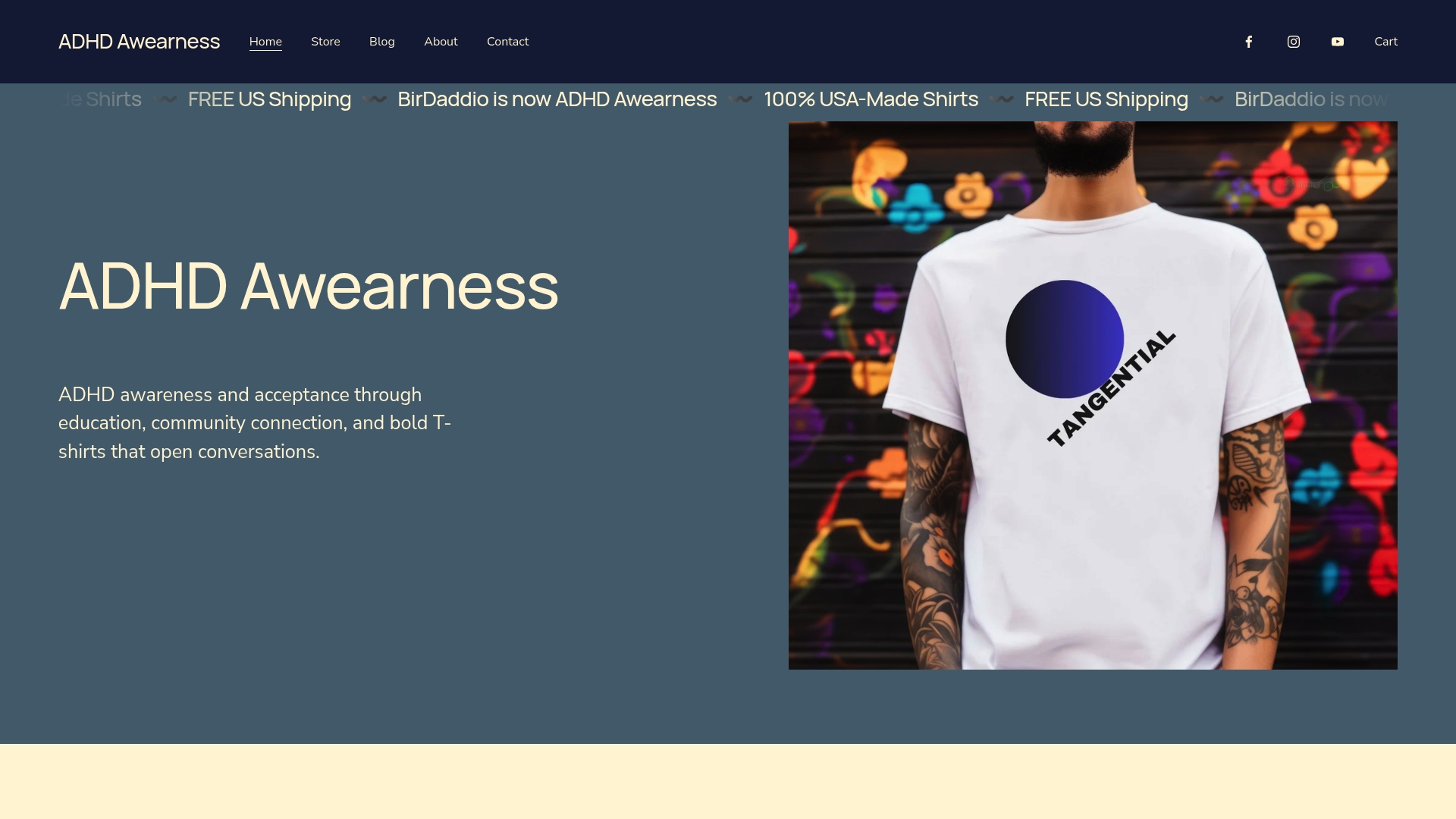
The ADHD Awearness website offers free blogs, videos, and podcasts that cover everything from self-advocacy to daily coping strategies. Every piece of content is written to be used, not just read. The organization also runs an online store featuring 100% USA-made awareness apparel, with a portion of each sale supporting ADHD-focused nonprofits. The Abilities Collection celebrates ADHD strengths and gives you a way to carry the message of neurodiversity into every conversation you have.
FAQ
What is an ADHD resource hub?
An ADHD resource hub is an online platform that combines information, tools, and community support to help people with ADHD, their families, and educators navigate daily challenges and advocacy needs.
How do I build ADHD self-advocacy skills?
Start by learning which laws protect you, such as the ADA for workplaces with 15 or more employees, then practice framing your needs as functional outcome support rather than disability requests to increase the likelihood of getting accommodations.
What is ADHD advocacy explained in simple terms?
ADHD advocacy means actively using legal protections, communication strategies, and community support to secure accommodations and reduce stigma in schools, workplaces, and public life.
Are there free ADHD resource hubs available?
Yes. Platforms like r/ADHD, CHADD, and ADHD Awearness offer free access to community support, expert articles, and advocacy tools without requiring a subscription.
How do ADHD social media communities support people with ADHD?
ADHD social media communities provide peer validation, real-time support, and shared strategies. Research shows that honest, connection-focused content builds more trust and lasting support than content created purely for engagement metrics.