
TL;DR:
- Children and adults with ADHD are at increased risk of developing substance use disorders due to impulsivity, emotional dysregulation, and shared genetics. Early diagnosis and treatment, including medication and behavioral therapy, significantly reduce this risk and improve outcomes. Families should recognize warning signs, reduce stigma, and seek comprehensive care to support at-risk individuals effectively.
ADHD is defined as a neurodevelopmental disorder that significantly raises the risk of substance use disorders (SUDs). The adhd and substance use connection is not coincidental. Nearly 1 in 4 U.S. adults with ADHD have a lifetime SUD, a rate that dwarfs the general population. Clinically, this overlap is recognized by the National Institute on Drug Abuse (NIDA) and the CDC as a major public health concern. Understanding why this link exists, and what to do about it, is the first step toward better outcomes for individuals with ADHD and their families.
What factors drive the ADHD and substance use connection?
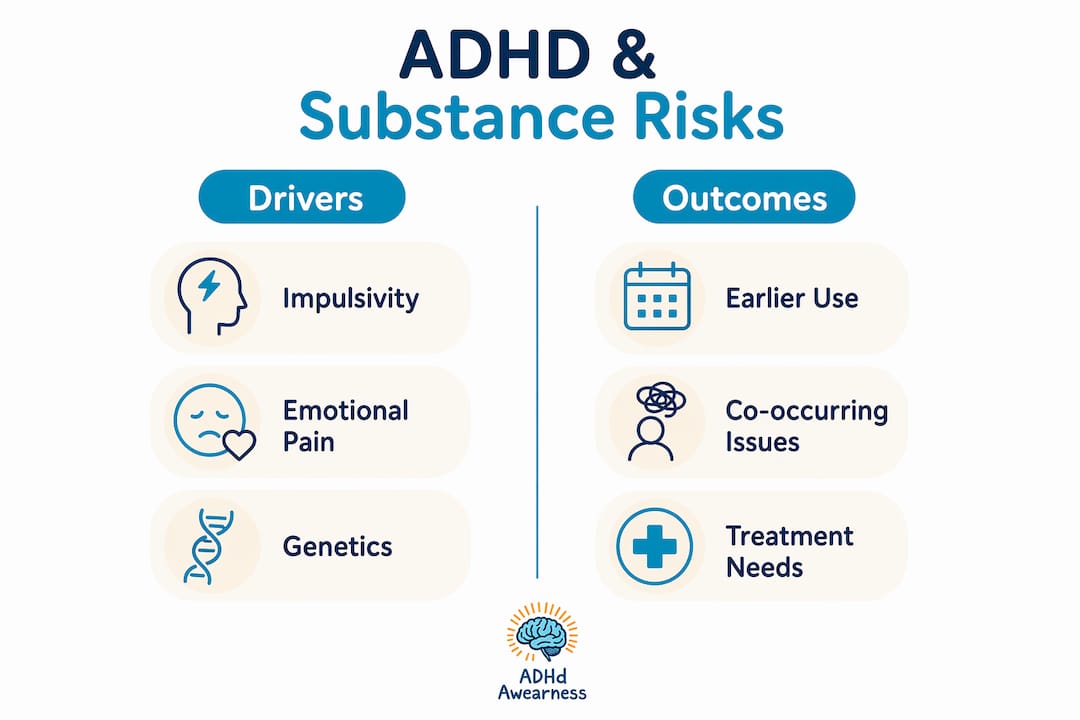
The relationship between ADHD and elevated substance use risk is rooted in three distinct areas: behavior, brain chemistry, and genetics. None of these factors work in isolation. Together, they create a vulnerability that is real, measurable, and worth taking seriously.

Impulsivity and hyperactivity as risk drivers
Impulsivity drives substance use initiation in roughly 65% of cases among people with ADHD. That statistic points to something important: the problem is not weak willpower. The ADHD brain struggles to pause, evaluate consequences, and redirect. When a substance offers immediate relief or stimulation, the impulsive brain takes the shortcut. The hyperactive-impulsive type of ADHD carries a particularly elevated risk because impulsivity is its defining feature.
Emotional dysregulation and self-medication
Many people with ADHD use substances not to seek a high, but to quiet emotional pain. Emotional dysregulation leads to substance use as a coping mechanism, especially when distress tolerance is low. Think of it like a pressure valve. When the emotional pressure builds and no healthy outlet exists, substances become the release. Alcohol, cannabis, and nicotine each offer short-term relief from anxiety, frustration, or the exhaustion of masking ADHD symptoms all day.
Genetic overlap with substance use disorders
The ADHD and addiction risk connection has a biological foundation. Polygenic risk scores for ADHD increase the likelihood of heroin use and show shared genetic risk with opioid use disorder, particularly through inattentive symptoms. This genetic overlap explains why substance abuse and ADHD so often appear together in the same family tree. It also reduces the moral blame that families sometimes place on themselves or their loved ones.
Earlier onset of substance use
People with ADHD begin using substances measurably earlier than their peers. Childhood ADHD predicts earlier substance use by about 1.43 years for tobacco, 1.03 years for alcohol, and 1.15 years for cannabis. Starting earlier matters because adolescent brains are more vulnerable to addiction pathways. Earlier onset also correlates with more severe dependence later in life.
The key risk factors for substance use in ADHD include:
- Poor impulse control that bypasses risk evaluation before acting
- Emotional dysregulation that turns substances into a coping tool
- Genetic predisposition shared between ADHD inattentive symptoms and opioid use disorder
- Earlier exposure age to tobacco, alcohol, and cannabis compared to peers without ADHD
- Co-occurring anxiety or conduct disorder that compounds vulnerability
Pro Tip: If your child or family member with ADHD shows early curiosity about substances, treat it as a clinical signal, not a character flaw. Early intervention changes outcomes.
How does untreated ADHD affect substance use outcomes?
Untreated ADHD does not simply leave symptoms unmanaged. It actively worsens the behavioral and emotional vulnerabilities that lead to substance use. The impact of ADHD on substance use is most severe when diagnosis and treatment are delayed.
When ADHD goes unrecognized, individuals often spend years struggling with focus, emotional outbursts, and social rejection without understanding why. Substances fill the gap that treatment could have addressed. One in five people seeking SUD treatment present with comorbid ADHD, which suggests that a significant portion of addiction cases are driven by undiagnosed or untreated ADHD.
Co-occurring conditions make the picture more complex. Anxiety disorders and conduct disorder frequently appear alongside ADHD, and each one raises the risk of substance use further. A teenager with ADHD and untreated anxiety is not just dealing with two separate problems. The two conditions amplify each other, creating a much higher threshold of distress that substances can temporarily relieve.
The table below shows how untreated versus treated ADHD compares across key substance use outcomes:
| Outcome | Untreated ADHD | Treated ADHD |
|---|---|---|
| Age of first substance use | Earlier by 1–1.5 years | Closer to general population average |
| SUD lifetime prevalence | Significantly elevated | Reduced with early intervention |
| Treatment retention in SUD programs | Lower | Higher with integrated ADHD care |
| Heavy substance use days | More frequent | Reduced with stimulant treatment |
| Emotional regulation | Consistently poor | Improved with medication and therapy |
Early diagnosis is the single most protective factor. When ADHD is identified and treated in childhood or adolescence, the window of vulnerability narrows considerably. Families who push for evaluation at the first signs of inattention or impulsivity are not overreacting. They are closing a door before it opens to something harder to manage.
What treatment approaches work for co-occurring ADHD and SUD?
Treating ADHD alongside a substance use disorder requires an integrated approach. Addressing only one condition leaves the other untreated, and the untreated condition will undermine any progress made.
Stimulant medications: the evidence is clear
The most common concern families raise is whether stimulant medications are safe when substance use is already a problem. Clinical evidence answers this directly. Stimulant treatment does not increase new SUD risk and is associated with better treatment retention and fewer heavy substance use days. The fear that treating ADHD with stimulants fuels addiction is not supported by the evidence. In fact, the opposite is often true: effective ADHD treatment reduces the emotional and behavioral drivers of substance use.
Combined medication and cognitive behavioral therapy
Medication alone is rarely enough. Combining medication with CBT reduces addiction rates by 45% in adults with ADHD compared to single or no treatment. CBT teaches people to recognize thought patterns that lead to impulsive decisions, including the decision to use substances. It builds the mental brakes that ADHD naturally weakens.
The most effective integrated treatment plan typically follows these steps:
- Comprehensive assessment to identify ADHD subtype, SUD severity, and any co-occurring conditions
- Stabilization of substance use before or alongside ADHD medication initiation, depending on clinical judgment
- Stimulant or non-stimulant ADHD medication selected based on individual history and risk profile
- Cognitive behavioral therapy (CBT) to address impulsive patterns and substance use triggers
- Dialectical behavior therapy (DBT) or mindfulness training to build distress tolerance and emotion regulation skills
- Regular monitoring of both ADHD symptoms and substance use behaviors across time
DBT and mindfulness as complementary tools
DBT and mindfulness address the emotional regulation gap that medication alone cannot fill. These approaches teach people to sit with discomfort without reaching for a substance. For someone with ADHD whose nervous system is constantly seeking stimulation or relief, these skills are genuinely life-changing.
Pro Tip: Ask any treatment provider whether they have experience with both ADHD and SUD. A provider who treats only one condition may miss the interaction between them.
What prevention and support strategies can families use?
Families are not passive bystanders in this process. The home environment, the quality of communication, and the presence of consistent support all shape how a person with ADHD navigates substance use risk.
Practical strategies that make a real difference include:
- Learn the early warning signs. Increased secrecy, sudden changes in friend groups, or escalating emotional outbursts can signal early substance experimentation. Treat these as data points, not moral failures.
- Build emotional regulation skills early. Teach children with ADHD to name emotions, use breathing techniques, and identify their personal stress triggers before substances become a coping option.
- Reduce stigma at home. Children who feel ashamed of their ADHD are more likely to self-medicate. Understanding the impact of ADHD stigma on children helps families create an environment where asking for help feels safe.
- Stay curious, not accusatory. When you suspect substance use, open the conversation with questions rather than accusations. "I've noticed you seem more stressed lately. What's going on?" lands very differently than "Are you using drugs?"
- Connect with community resources. ADHD-focused charities and advocacy organizations offer family education programs, peer support groups, and referrals to specialists who understand the ADHD and SUD overlap.
- Pursue professional evaluation promptly. If you suspect both ADHD and substance use are present, seek a clinician who can assess both simultaneously. Integrated evaluation leads to integrated treatment.
The goal is not to eliminate all risk. The goal is to build enough protective factors, skills, emotional safety, and informed support, that the risk becomes manageable.
Why I think we've been getting this conversation wrong
People with ADHD and their families deserve honesty about what the research actually shows, not reassurance that softens the truth.
The ADHD predisposition to addiction is real. It is neurological, genetic, and behavioral all at once. Telling families "just keep them busy" or "they'll grow out of it" is not only unhelpful. It leaves a window open that early treatment could close. I've seen families spend years blaming themselves for a child's substance use when the real driver was undiagnosed ADHD that nobody caught in time.
The other misconception I want to address directly is the fear around stimulant medications. Withholding effective ADHD treatment because of addiction concerns, when the evidence shows stimulants reduce substance use risk rather than increase it, causes real harm. The conversation about medication should be individualized and honest, not driven by stigma. Stimulant prescriptions do not increase new SUD diagnoses in adults. That finding should change how we talk about treatment options.
What actually works is a combination of early diagnosis, medication when appropriate, behavioral therapy, and a family environment where ADHD is understood rather than shamed. None of those things are complicated. They just require commitment and accurate information.
— Bruce
How ADHD Awearness supports families navigating this challenge
Understanding the link between ADHD and substance use is one thing. Having a community that gets it is another.
ADHD Awearness exists to make that community real. Through blogs, videos, and podcasts, the platform delivers clear, research-backed education on topics exactly like this one. Every piece of content is designed to reduce stigma and give families the language they need to have harder conversations. The ADHD Awearness store carries 100% USA-made apparel that turns everyday clothing into a conversation starter, with a portion of every sale going directly to ADHD-focused nonprofits. Visit ADHD Awearness to find resources, connect with a community that understands, and take a visible stand for awareness.
FAQ
What percentage of adults with ADHD develop a substance use disorder?
23.8% of U.S. adults with ADHD have a lifetime substance use disorder. That rate is substantially higher than in the general adult population.
Does stimulant medication increase addiction risk in people with ADHD?
No. Clinical evidence shows stimulant treatment does not increase new SUD diagnoses and is linked to better treatment retention and fewer heavy substance use days in adults with ADHD and co-occurring SUD.
Why do people with ADHD use substances at younger ages?
People with childhood ADHD begin using tobacco, alcohol, and cannabis roughly 1–1.5 years earlier than peers without ADHD. Impulsivity and emotional dysregulation are the primary drivers of this earlier onset.
What is the most effective treatment for co-occurring ADHD and substance use disorder?
Combined medication and cognitive behavioral therapy reduces addiction rates by 45% in adults with ADHD. Adding DBT or mindfulness training to address emotional regulation improves outcomes further.
How common is ADHD among people seeking substance use treatment?
20% of people seeking SUD treatment present with comorbid ADHD. This makes ADHD screening a critical step in any substance use treatment intake process.