

TL;DR:
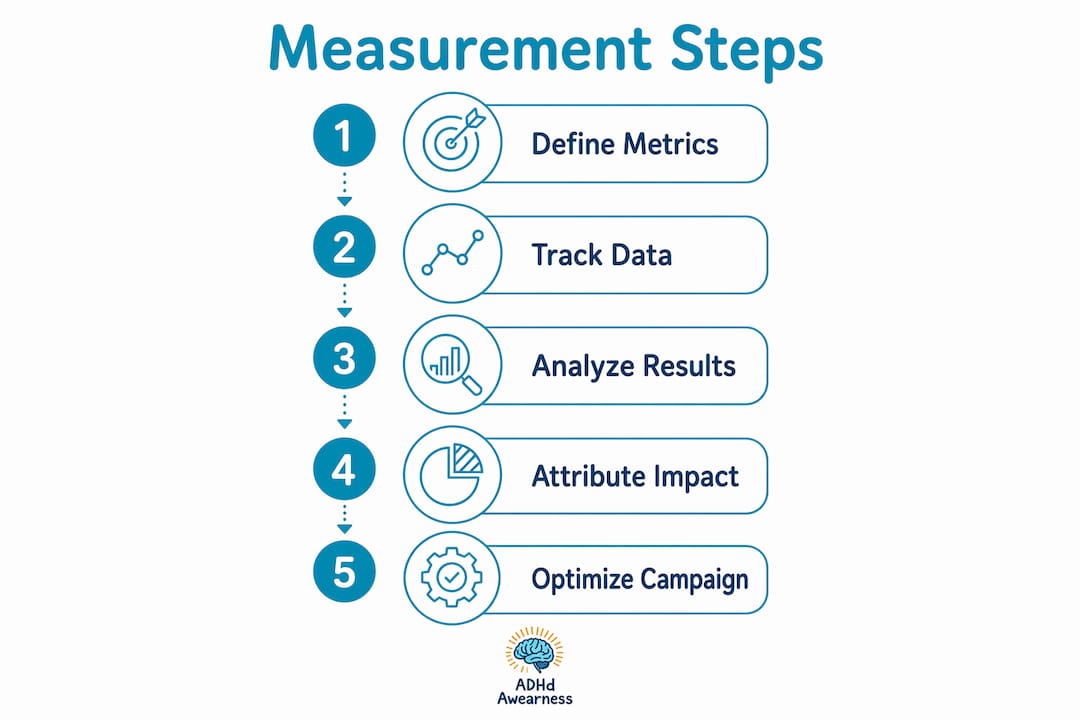
- Measuring ADHD nonprofit campaign impact connects mission metrics to real community outcomes rather than just counting clicks.
- Using unified data and mission-centered KPIs like donor acquisition and volunteer signups helps assess long-term campaign health effectively.
Measuring ADHD nonprofit campaign impact is defined as the process of connecting mission-aligned metrics to real community outcomes, not just counting clicks or page views. Most nonprofit leaders know their campaigns matter. Fewer know exactly how much. The gap between running a campaign and proving its effect on donor behavior, community awareness, and program reach is where many organizations lose momentum. Closing that gap requires unifying data from your CRM, analytics platform, and outreach channels into one clear picture. ADHD Awearness has built its model around exactly this kind of mission-centered accountability, and the principles apply directly to any ADHD-focused nonprofit.
How to measure ADHD nonprofit campaign impact with the right metrics
The first decision you make in any campaign evaluation shapes everything that follows. Nonprofit marketing ROI must be measured through mission outcomes, not just revenue, using equivalent cost value to approximate real-world impact. That means a volunteer hour, valued at roughly $30–$35, carries measurable weight alongside a cash donation.
Your primary metrics should reflect the behaviors that sustain your mission long term. For ADHD nonprofits, those behaviors cluster around four areas:
- Donor acquisition: Track how many new donors came in, and specifically how many signed up as monthly givers versus one-time contributors.
- Email list growth: A growing, engaged email list signals expanding community reach. Track new subscribers per campaign alongside open and click rates.
- Engagement rates: Social shares, video completions, and content downloads show whether your message is resonating beyond your existing audience.
- Volunteer signups: Volunteers represent both mission capacity and a natural pipeline for recurring giving programs.
Secondary micro-conversions matter too. Event RSVPs, resource downloads, and petition signatures all indicate movement through your engagement funnel. They are not the destination, but they signal direction.
Recurring donors retain at rates between 80–90% year over year, compared to 40–45% for one-time donors. That gap is not a small difference. It means a monthly giving program is one of the highest-leverage investments your organization can make, and tracking its growth is one of the clearest indicators of long-term campaign health.

Pro Tip: Segment your donor acquisition data by campaign source from day one. Mixing organic and paid acquisition into a single "new donors" number makes it nearly impossible to evaluate which campaigns actually drove growth.
What tools do you need to track ADHD outreach results accurately?
The right technology stack does not need to be expensive. It needs to be connected. Nonprofits often chase channel activity rather than actual results, and the fix is integrating CRM data with campaign analytics using UTM tagging on every link.
UTM parameters are short tags you add to campaign URLs. They tell your analytics platform exactly which ad, email, or social post drove a visitor to your site. Without them, you are guessing at attribution. With them, you can trace a monthly donor back to the specific Facebook post or email subject line that first brought them in.
| Platform category | Primary function | What it measures |
|---|---|---|
| UTM tracking | Campaign link tagging | Source, medium, and campaign per conversion |
| CRM platform | Donor relationship management | Donor lifetime value, retention, and giving history |
| Web analytics (e.g., Google Analytics 4) | Site behavior tracking | Page visits, goal completions, conversion paths |
| Email platform | List and campaign management | Open rates, click rates, list growth |
| Survey tool | Qualitative impact capture | Participant confidence, community connection change |
The goal is a unified donor view. That means stitching together the moment someone first clicked your ad, the email they opened three days later, and the donation they made two weeks after that. No single platform does this automatically. You build it by connecting your CRM to your analytics platform and tagging every campaign touchpoint consistently.
Using UTM parameters on all campaign links and connecting CRM data to analytics platforms are the two practices that separate nonprofits with clear attribution from those flying blind.
Pro Tip: Google Analytics 4 allows you to set custom conversion events. Define "monthly donor signup," "email subscription," and "volunteer registration" as separate conversion events so you can see exactly which campaigns drive each outcome.
Step-by-step process to analyze and attribute ADHD campaign outcomes
Attribution is the biggest pitfall in nonprofit impact measurement. Done wrong, it inflates the apparent value of paid campaigns and hides the true drivers of growth.
The clearest framework starts with a conversion hierarchy. Organize your outcomes into three levels:
- Macro-conversions: Monthly donor signups, one-time donations above a threshold, and volunteer commitments. These are your primary mission outcomes.
- Mid-conversions: Email list subscriptions, event registrations, and resource downloads. These indicate engaged community members moving toward deeper involvement.
- Micro-conversions: Social shares, video views above 50%, and landing page visits from campaign traffic. These are early signals, not success metrics on their own.
Once your hierarchy is set, run an incrementality test before drawing conclusions from paid campaign data. Geo holdout tests isolate true campaign impact by comparing conversion rates in regions that saw your ads against regions that did not. This prevents the common error of crediting a paid campaign for conversions that would have happened organically anyway.
| Attribution approach | Strength | Limitation |
|---|---|---|
| Last-click attribution | Simple to implement | Ignores all earlier touchpoints |
| First-click attribution | Shows acquisition source | Ignores nurture and conversion steps |
| Linear attribution | Credits every touchpoint equally | Can dilute the true conversion driver |
| Incrementality testing | Measures true causal impact | Requires planning and larger audience size |
| Data-driven attribution | Weights touchpoints by actual contribution | Needs significant data volume to be reliable |
Recurring donor growth is your most reliable sustainability indicator. Inviting one-time donors to convert to monthly giving within the first 30 days achieves a 5% conversion rate. That timing window is short, and most nonprofits miss it by waiting too long to follow up.
Connect your engagement metrics to fundraising outcomes at the end of each campaign cycle. If email open rates rose but donor conversions stayed flat, your message is reaching people but not moving them. That gap tells you exactly where to focus next.
Common mistakes when you assess nonprofit impact for ADHD campaigns
The most damaging measurement mistake is not tracking too little. It is tracking too much without prioritization. Successful nonprofits focus on a conversion hierarchy rather than a broad set of metrics, because clarity on a few key outcomes drives better decisions than noise from dozens of data points.
Watch for these specific traps:
- Last-click over-attribution: Crediting paid ads for donors who were already on your email list and would have given anyway. Incrementality testing is the fix.
- Vanity metrics as proof of impact: High follower counts and post impressions feel good but do not correlate reliably with donor acquisition or program reach.
- Data silos: When your email platform, CRM, and web analytics do not talk to each other, you cannot see the full donor journey. Integration is not optional if you want accurate impact data.
- Marketing and program teams working separately: Campaign data only becomes meaningful when paired with program outcome data. A 20% rise in website traffic means little unless you can connect it to actual community members served.
"For advocacy and awareness campaigns that are hard to quantify, simple repeated 3–5 question surveys over time, alongside output tracking, provide effective impact assessment." — DonorDock
ADHD awareness work often falls into the "hard to quantify" category. You cannot always put a number on reduced stigma or improved family understanding. Short, consistent surveys asking participants about their confidence and sense of community connection, repeated across multiple campaign cycles, give you a reliable trend line without requiring a research budget.
What I've learned about measurement traps in ADHD nonprofit work
Most nonprofit teams I have seen struggle with measurement are not lacking data. They are drowning in it. The instinct is to track everything, report everything, and hope the board finds something meaningful. That approach produces reports that nobody acts on.
The shift that actually changes outcomes is deciding, before a campaign launches, which two or three metrics will determine whether it succeeded. Monthly donor growth is almost always one of them. Linking volunteer networks intentionally to recurring giving programs greatly improves sustainability, and that connection only becomes visible when you are tracking both sides of it.
Digital measurement practices are evolving fast. Privacy changes have made third-party cookie tracking less reliable, which makes first-party data, meaning your own email list and CRM, more valuable than ever. Building your email list is not just a marketing tactic. It is your most durable measurement asset. Every subscriber you earn through an ADHD awareness campaign is a data point you own and can track over time.
The nonprofits that report impact most clearly are not the ones with the most sophisticated tools. They are the ones that chose a small number of mission-aligned KPIs and reported on them consistently, quarter after quarter. Simplicity in reporting builds stakeholder trust faster than complexity ever will.
— Jason
ADHD Awearness and the tools that support your campaign work
ADHD Awearness is built for exactly the kind of community-centered impact work this article describes. The platform combines educational content, advocacy resources, and a direct connection to ADHD-focused nonprofits through every purchase made in the store.
Every 100% USA-made shirt and hoodie sold through the ADHD Awearness store directs a portion of proceeds to ADHD nonprofits, making merchandise a measurable fundraising channel in its own right. If you are building a donor program or looking to expand your community reach, ADHD Awearness offers a model where awareness and financial support reinforce each other. The science resources on the site also give your team credible, research-backed content to anchor campaign messaging and engagement metrics.
FAQ
What is the most important metric for ADHD nonprofit campaigns?
Monthly donor retention is the single most telling metric. Recurring donors retain at 80–90% annually, making monthly giving growth a reliable indicator of long-term campaign health.
How do UTM parameters help evaluate ADHD campaign success?
UTM parameters tag every campaign link with source, medium, and campaign name. This lets your analytics platform trace each donor or subscriber back to the specific ad, email, or post that first brought them to your site.
What is incrementality testing in nonprofit measurement?
Incrementality testing, such as a geo holdout test, compares conversion rates in regions exposed to your campaign against regions that were not. This method isolates true paid campaign impact from organic conversions that would have occurred regardless.
How do you measure ADHD awareness impact when outcomes are hard to quantify?
Short, repeated surveys of 3–5 questions measuring participant confidence and community connection, run consistently across campaign cycles, provide reliable trend data without requiring a large research budget.
When should you invite one-time donors to become monthly givers?
The optimal window is within the first 30 days after an initial gift. Immediate post-gift offers achieve a 5% conversion rate to monthly giving, which drops significantly when the ask is delayed.