
TL;DR:
- Adults with ADHD often feel misunderstood because their internal experiences do not match external perceptions. Stigma, especially internalized stigma, worsens this gap and leads to social withdrawal and miscommunication. Understanding the effects of rejection sensitivity and communication differences can help improve social interactions and foster better support.
Adults with ADHD feel misunderstood because their internal experience rarely matches what others observe from the outside. The clinical term for this gap is "ADHD-related social perception mismatch," and it sits at the intersection of stigma, rejection sensitivity, and executive function differences. Feeling misunderstood with ADHD is not a personal failure or a sign of poor social skills. It is a predictable outcome of a brain that processes the world differently in a society built around neurotypical expectations. Understanding why adhd adults feel misunderstood is the first step toward changing that experience for the better.
Why ADHD adults feel misunderstood: stigma at the root
Stigma is the primary driver of misunderstanding for adults with ADHD. A 2026 systematic review published on PubMed identifies four distinct stigma types that adults with ADHD face: self-stigma, public stigma, perceived stigma, and structural stigma. Each type creates a different barrier to being understood.
Self-stigma, also called internalized stigma, is the most damaging. The same 2026 review finds that greater symptom severity correlates directly with higher internalized stigma and worse quality of life. That means the adults who struggle most with ADHD symptoms are also the ones most likely to believe the negative things society says about them.
Public stigma shapes how coworkers, friends, and family members interpret ADHD behavior. When someone with ADHD forgets a commitment or loses focus during a conversation, others often read it as laziness or indifference rather than a neurological difference. That misread creates distance, and distance creates loneliness.
High internalized stigma also leads adults to minimize their needs and avoid disclosing their diagnosis. When you don't tell people you have ADHD, they can't adjust their expectations or offer support. The result is a self-reinforcing loop where stigma produces silence, silence produces misunderstanding, and misunderstanding deepens the stigma.
- Self-stigma: Believing negative stereotypes about yourself because of your ADHD diagnosis
- Public stigma: Facing judgment or dismissal from others who misread ADHD symptoms as character flaws
- Perceived stigma: Anticipating rejection before it happens, which causes preemptive withdrawal
- Structural stigma: Encountering systems (workplaces, schools, healthcare) that don't accommodate ADHD needs
Pro Tip: If you notice yourself downplaying your ADHD to avoid judgment, that is self-stigma at work. Naming it is the first step to separating your identity from the stereotype.
How does rejection sensitivity make ADHD feel isolating?
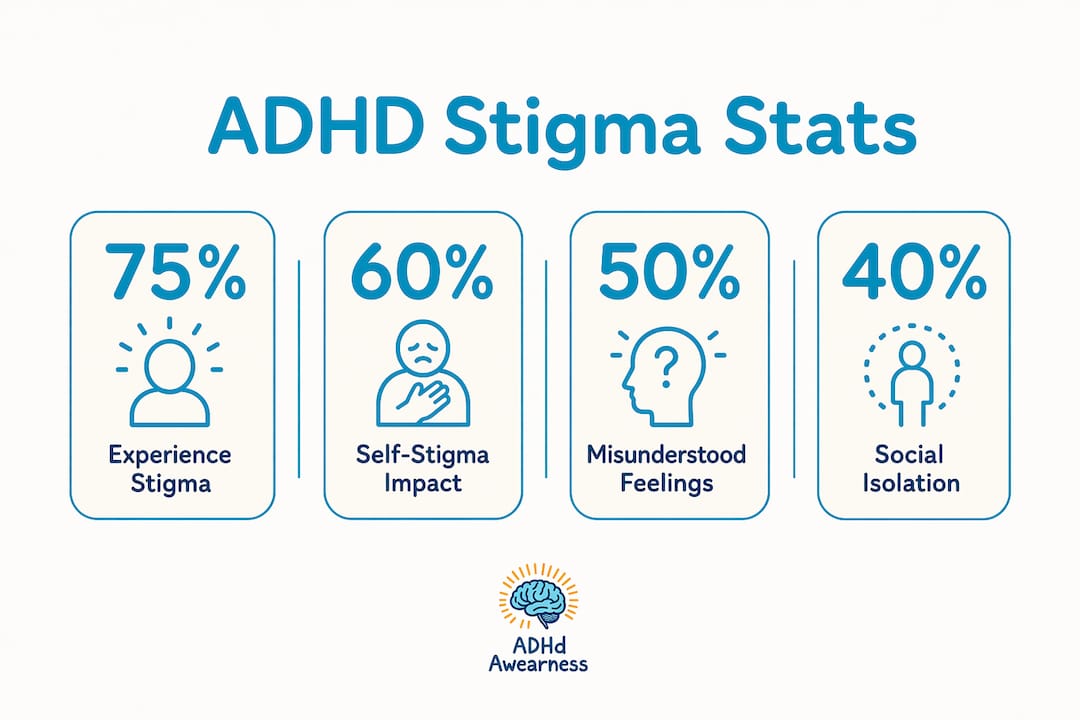
Rejection sensitive dysphoria, commonly called RSD, is a pattern where adults with ADHD experience intense emotional pain in response to perceived criticism or social rejection. A 2026 qualitative study connects RSD, masking, and withdrawal to low-quality friendships and depressive symptoms. The emotional pain is real, and it shapes social behavior in ways that others rarely see coming.
RSD does not require actual rejection to trigger. Perceived rejection, a tone of voice, a delayed text reply, or a canceled plan, can set off the same emotional response as a direct insult. The brain interprets the ambiguous signal as a threat and responds with full emotional force. That reaction can look like overreaction to outsiders, which adds another layer of misunderstanding.
Masking is the coping strategy many adults with ADHD use to hide these reactions. They suppress their emotional responses, perform calm, and pretend the interaction did not affect them. Research links masking and emotional bracing to behaviors that appear disinterested or cold, even though the internal experience is the opposite. Friends and partners see the mask and conclude the person doesn't care.
The withdrawal that follows RSD is not true rejection of the other person. It is a protective anxiety response. But because it looks like pulling away, the other person often pulls away too. That mutual withdrawal is one of the clearest reasons why ADHD friendships feel one-sided over time.
- RSD triggers emotional dysregulation from perceived, not just actual, rejection
- Masking hides the emotional response but creates a cold or distant impression
- Withdrawal protects the person with ADHD but damages relationship repair
- Nearly two-thirds of adults with ADHD report feeling lonely frequently, with RSD identified as a key contributing factor
Why do social norms and communication differences cause misunderstandings?
The gap between what an adult with ADHD intends and what others observe is one of the most frustrating parts of living with the condition. ADHD-related misunderstandings in relationships most often come from differences in attention, follow-through, and emotional regulation, not from a lack of care. That distinction matters enormously, but it is rarely communicated clearly.

Executive function differences explain most of the observable behaviors that others misinterpret. Executive function is the brain's management system. It controls planning, time awareness, task initiation, and working memory. When executive function is inconsistent, the results look like broken promises, missed deadlines, and poor listening, even when the person genuinely cares.
| ADHD behavior | Common misinterpretation | Actual cause |
|---|---|---|
| Slow text replies | Doesn't care about the friendship | Processing delays and task-switching difficulty |
| Forgetting plans | Irresponsible or selfish | Working memory gaps, not indifference |
| Interrupting in conversation | Rude or self-centered | Impulsivity and fear of losing the thought |
| Zoning out mid-conversation | Bored or dismissive | Attention variability, not disrespect |
| Inconsistent follow-through | Unreliable | Executive function inconsistency under stress |
The behavioral-expectation gap that ADHD creates fuels misunderstanding despite good intentions. A friend who cancels plans twice in a row is labeled unreliable. A partner who zones out during a serious conversation is labeled uncaring. Neither label reflects the internal reality, but the behavior is real and the impact on others is real too.
Pro Tip: When explaining an ADHD-related behavior to someone, lead with the intention before the explanation. "I genuinely wanted to be there, and here's what happened in my brain" lands very differently than a list of excuses.
Improving ADHD conversation skills is one of the most direct ways to close this gap. Naming the mechanism, not just apologizing for the outcome, gives others a framework for understanding rather than a reason for frustration.
How does ADHD identity and medication complicate self-understanding?
ADHD identity is not fixed, and that instability creates its own form of misunderstanding. A 2026 paper in the British Journal of Psychiatry finds that medication affects ADHD identity and social belonging in complex ways. Adults who respond well to medication sometimes distance themselves from the ADHD label because their symptoms feel less present. That distancing can reduce their connection to the ADHD community and limit the external understanding they receive.
When someone manages their ADHD effectively with medication, they may appear fully neurotypical to others. That appearance creates a different problem. People stop accommodating them, stop checking in, and assume everything is fine. The internal experience of ADHD, the mental effort required to maintain that appearance, becomes invisible.
Identity management strategies also affect how much others understand. Adults who choose not to disclose their diagnosis, whether from stigma or privacy, give others no framework for interpreting their behavior. Identity distancing due to medication can reduce ADHD social identification, limiting external understanding and support.
- Adults who disclose their ADHD diagnosis selectively often receive inconsistent support
- Those who appear "high-functioning" on medication face skepticism when they do struggle
- Non-disclosure protects against stigma but removes opportunities for accommodation
- Distancing from the ADHD label can feel like relief but may increase isolation long-term
Practical strategies for feeling more understood with ADHD
Feeling understood starts with communicating your experience in terms others can actually receive. Relationship misunderstandings respond better to validation and practical communication strategies than to moral arguments about who is right or wrong. That reframe alone changes the tone of most difficult conversations.
- Name the mechanism, not just the apology. Instead of saying "I'm sorry I forgot," try "My working memory dropped the ball on this, and I'm putting a reminder system in place." Specificity builds credibility.
- Disclose strategically. You don't owe anyone your diagnosis, but selective disclosure to trusted people creates space for real understanding. A complete guide to ADHD adult support can help you decide when and how to share.
- Recognize RSD before it drives behavior. When you feel a sudden wave of shame or the urge to withdraw, pause and ask whether the rejection is real or perceived. That two-second check can prevent a week of unnecessary distance.
- Use written communication as a backup. Adults with ADHD often process better in writing. Following up a verbal conversation with a short text or email reduces the chance of miscommunication and shows you were paying attention.
- Find community with people who get it. Peer support groups reduce the emotional labor of constant explanation. When you're around others with ADHD, you spend less energy justifying your experience and more energy building genuine connection.
Pro Tip: Before a difficult conversation, write down the three most important things you want the other person to understand. ADHD brains lose track of key points under emotional pressure. The list keeps you anchored.
What I've learned about being misunderstood with ADHD
The hardest part of living with ADHD isn't the forgetfulness or the focus struggles. It's the accumulated weight of being consistently misread by people you care about. I've seen this pattern play out in countless conversations with adults who are genuinely trying their best and still walking away from interactions feeling like failures.
What strikes me most is how rarely the misunderstanding is about malice. Friends and partners aren't trying to be cruel when they label someone with ADHD as unreliable. They're working with incomplete information and a social script that doesn't account for neurological difference. The real problem is the gap between what ADHD looks like from the outside and what it feels like from the inside.
Self-compassion is not a soft concept here. It is a practical tool. When you stop treating your ADHD traits as moral failures, you communicate about them differently. You stop over-apologizing and start explaining. That shift changes how others respond to you.
The adults I've seen build the strongest connections are the ones who found their people first, whether in a support group, an online community, or a single friend who took the time to understand. From that foundation of being known, everything else gets easier. Advocacy, disclosure, and even the hard conversations with people who still don't get it become less exhausting when you're not doing it alone.
— Jason
ADHD Awearness: a community that gets it
If you've spent years explaining yourself to people who still don't quite understand, you deserve a space where that explanation isn't necessary.
ADHD Awearness was built for exactly that. The site offers educational content, community resources, and 100% USA-made apparel designed to spark real conversations about neurodiversity. The Abilities Collection celebrates ADHD strengths rather than framing them as deficits. The Your Own Way Collection speaks directly to the experience of moving through the world differently. Every purchase supports ADHD-focused nonprofits, so wearing the message also funds the mission. Visit ADHD Awearness to find resources, community, and gear that says what you've been trying to say all along.
FAQ
Why do adults with ADHD feel misunderstood so often?
Adults with ADHD feel misunderstood because their internal experience, shaped by executive function differences, rejection sensitivity, and emotional regulation challenges, rarely matches what others observe from the outside. Stigma compounds this by discouraging disclosure, which removes the context others need to interpret ADHD behavior accurately.
What is rejection sensitive dysphoria and how does it affect relationships?
Rejection sensitive dysphoria (RSD) is an intense emotional response to perceived criticism or social rejection that is common in ADHD. Research links RSD to masking, withdrawal, and lower-quality friendships, which can make ADHD friendships feel one-sided even when both people care about the relationship.
Does ADHD medication affect how understood you feel socially?
Yes. A 2026 study in the British Journal of Psychiatry found that adults who respond well to medication sometimes distance themselves from the ADHD label, which can reduce their connection to the ADHD community and limit the support and understanding they receive from others.
How can adults with ADHD improve communication in relationships?
Naming the neurological mechanism behind a behavior, rather than just apologizing for the outcome, gives others a framework for understanding rather than a reason for frustration. Practical tools like written follow-ups and proactive RSD awareness also reduce the frequency of misunderstandings.
Is feeling lonely with ADHD common?
Nearly two-thirds of adults with ADHD report feeling lonely frequently, according to an ADHD Australia survey. That loneliness stems from the mismatch between ADHD symptoms and social expectations, not from a lack of desire for connection.