
TL;DR:
- ADHD overstimulation occurs when the brain receives excessive sensory input that it cannot filter, leading to physical, emotional, and cognitive overload. It affects many individuals with ADHD, causing symptoms that vary by age and situation, and is triggered by environmental, task-related, and emotional factors. Proactive management, including environmental modifications and sensory breaks, can help reduce overload before it intensifies.
ADHD overstimulation is a neurological state where the brain receives more sensory input than it can filter or process, triggering real physical, emotional, and cognitive overload. The clinical term is sensory overload, and it affects a striking portion of the ADHD population. Up to 64% of children with ADHD show atypical sensory responses. That figure means sensory overload is not a rare edge case. It is a core daily challenge for most families and classrooms touched by ADHD.
What is ADHD overstimulation, and why does it happen?
ADHD overstimulation occurs because the ADHD brain struggles to filter irrelevant sensory data. Think of the brain's attentional system as a sound mixing board. In a neurotypical brain, the board automatically turns down background noise so the important signals come through clearly. In an ADHD brain, all inputs are processed equally, so the hum of fluorescent lights competes with a teacher's voice at the same volume. Nothing gets filtered out, and the system overloads.

The prefrontal cortex, the region responsible for attentional control and executive function, is underactive in ADHD. Dopamine dysregulation compounds the problem. Dopamine helps the brain assign priority to stimuli. When dopamine signaling is disrupted, the brain cannot decide what matters and what does not. Every sensation demands equal attention, and the cognitive load becomes unsustainable.
ADHD hypersensitivity is a related concept worth naming here. It describes the heightened emotional and sensory sensitivity that many people with ADHD experience. Overstimulation is what happens when that hypersensitivity reaches a breaking point. The two concepts are connected but distinct. Hypersensitivity is the underlying vulnerability; overstimulation is the acute crisis.
Pro Tip: If you or your child seems irritable or "difficult" in specific environments like grocery stores or open-plan offices, sensory overload may be the cause, not attitude or defiance.
One more nuance: sensory avoidance and sensory seeking can both trigger overstimulation. A child who craves loud music and a child who covers their ears in a noisy cafeteria are both experiencing ADHD and sensory processing conflict. A single management approach does not work for both profiles.
What are the symptoms of ADHD sensory overload?
Overstimulation symptoms in ADHD fall into three clear domains: physical, emotional, and cognitive. Recognizing which domain is activated first helps you intervene earlier.
Physical symptoms include:
- Headaches or migraines
- Rapid heartbeat or chest tightness
- Nausea or stomach discomfort
- Restlessness, fidgeting, or the urge to flee
- Skin sensitivity, such as clothing feeling unbearable
Emotional symptoms include:
- Sudden irritability or anger that feels disproportionate
- Anxiety or a sense of dread
- Mood swings that shift within minutes
- Tearfulness without a clear cause
Cognitive symptoms include:
- Brain fog and inability to form sentences
- Racing thoughts that cannot be slowed
- Indecisiveness, even about simple choices
- Difficulty following instructions or conversations
Symptoms that persist for more than one hour signal a need for professional support. That threshold matters because brief sensory spikes are normal. Extended overload that does not resolve with a short break suggests the nervous system needs more structured intervention.
Age shapes how these symptoms appear. Children tend to externalize. You see meltdowns, crying, throwing objects, or bolting from a room. Adults more often internalize. The adult version looks like withdrawal, shutdown, or paralysis. An adult sitting silently at their desk, unable to respond to emails, may be just as overloaded as a child mid-meltdown. The expression differs; the neurology is the same.
Pro Tip: Keep a brief symptom log for one week. Note the time, location, and what was happening before the overload. Patterns emerge quickly and make it much easier to identify specific triggers.
What triggers ADHD overstimulation?
Triggers vary by individual and by ADHD subtype, but several categories appear consistently across clinical reports.
Sensory environment triggers:
- Loud or unpredictable noises, such as alarms, crowds, or construction
- Bright or flickering fluorescent lighting
- Strong smells, including perfume, cleaning products, or food
- Physical touch that feels unexpected or unwanted
- Visual clutter in a workspace or classroom
Task and cognitive triggers:
- Multitasking or being asked to switch tasks without warning
- Long, unbroken work sessions without sensory relief
- Accumulation of small sensory inputs over several hours, even if each one seems minor
Emotional and social triggers:
- High-stakes conversations or conflict
- Social situations with many competing voices
- Stress from unfinished tasks or time pressure
The accumulation effect is one of the least understood triggers. A person with ADHD may handle a noisy morning commute, a loud meeting, and a cluttered desk individually. But by 3:00 PM, the combined load tips them into overload, and it looks sudden to everyone around them. Nothing dramatic happened at 3:00 PM. The nervous system simply ran out of capacity.
Knowing your personal trigger profile is the first step toward managing ADHD emotional overwhelm before it escalates. Parents and educators supporting ADHD learners can use this framework to audit classrooms and home environments for hidden sensory loads.
How can you manage and reduce ADHD overstimulation?
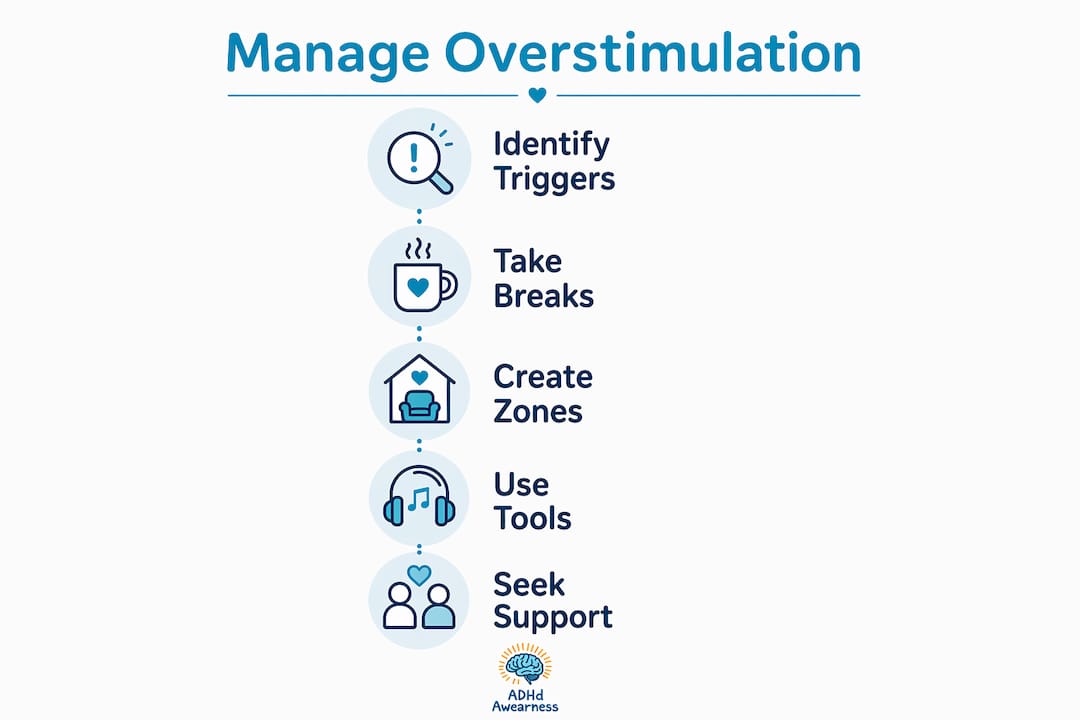
Management works best when it is proactive, not reactive. The goal is to reduce sensory load before the nervous system reaches its limit.
-
Take a sensory break immediately. A 10–15 minute break in a quiet, low-stimulus space interrupts the overload cycle before it peaks. This is the single most effective immediate intervention.
-
Modify the environment. Dimmer lighting, noise-canceling headphones, and removing visual clutter from a workspace lower the baseline sensory input. These changes cost little but deliver consistent relief.
-
Build a sensory toolkit. A sensory toolkit with weighted blankets, dimmable lamps, fidget tools, and calming scents gives the nervous system an off-ramp before a full meltdown occurs. Keep it accessible, not stored away.
-
Use grounding techniques at the right time. The 5-4-3-2-1 technique, where you name five things you see, four you can touch, three you hear, two you smell, and one you taste, works well. But grounding only works before peak overload. At full sensory flood, the only effective intervention is removing the person from the stimulating environment entirely.
-
Create protected focus blocks. Schedule low-demand, low-stimulus periods into the day. For children, this might be a quiet corner after school. For adults, it might be a no-meeting hour in the morning.
-
Consult an occupational therapist. Occupational therapists are the clinical standard for building individualized sensory processing plans. They assess whether a person is a sensory seeker or avoider and design environments accordingly.
Pro Tip: Design the environment before the crisis, not during it. A "low-stim zone" set up in advance, a corner with soft lighting and minimal clutter, gives the nervous system a reliable retreat.
The shift from reactive to proactive management changes everything. ADHD meltdowns are physiological responses to sensory overload, not behavioral choices. Punishing a meltdown does not reduce future overload. Redesigning the environment does.
How do overstimulation symptoms differ across ages and settings?
The neurology of overstimulation is consistent across age groups. The expression is not.
In children:
- Meltdowns are external and visible: crying, yelling, physical aggression, or running away
- Classroom settings amplify triggers because of fluorescent lighting, noise, and unpredictable schedules
- Children often cannot name what they are feeling, so behavior is the only signal available
- Parents may misread meltdowns as defiance, especially when the trigger is not obvious
In adults:
- Shutdowns and paralysis are more common than external meltdowns
- Adults may go silent, withdraw from conversations, or become unable to make decisions
- Work environments with open-plan offices, back-to-back meetings, and constant notifications are high-risk settings
- Adults often mask their overload until they reach home, where the meltdown finally surfaces
Setting matters as much as age. A child who manages well at home may fall apart at school because the sensory load is dramatically higher. An adult who functions in a quiet home office may struggle in a shared workspace. The impact on classroom behavior is one of the most documented areas of ADHD research, and it connects directly to unmanaged sensory overload.
Recognizing these behavioral changes as physiological responses, not character flaws, is the foundation of compassionate and effective support.
What I've learned about overstimulation that most people get wrong
Most people assume ADHD overstimulation is about being "too sensitive." That framing does real damage. Sensitivity implies a personality trait that someone should toughen up from. Overstimulation is a neurological limitation. The brain's filtering system is structurally different. You cannot willpower your way out of a broken filter.
The second mistake I see constantly is treating overstimulation as an event rather than a process. By the time a meltdown or shutdown is visible, the person has usually been accumulating sensory load for hours. The explosion at dinner was not caused by dinner. It was caused by everything that happened since 7:00 AM. When you understand that, you stop looking for the "trigger" at the moment of crisis and start looking at the whole day.
The third thing I want parents and educators to hear directly: proactive environment design is not coddling. It is the clinical recommendation. Removing fluorescent bulbs, creating a quiet corner, and building predictable schedules are not accommodations that make life easier for one child. They make the entire environment more functional for everyone in it.
ADHD Awearness exists partly because these conversations need to happen outside clinical offices. Awareness changes how people respond to someone in overload. That response, whether it is patience or punishment, shapes outcomes more than almost any other variable.
— Bruce
ADHD Awearness: education, advocacy, and community

ADHD Awearness brings together education, advocacy, and community for people who live with ADHD every day. The ADHD awareness resources on the site cover sensory overload, stigma, and practical coping strategies in plain language. For those who want to carry the conversation further, the ADHD Abilities Collection features 100% USA-made apparel that sparks real conversations about neurodiversity. A portion of every sale supports ADHD-focused nonprofits. Whether you are looking for information, community, or a way to show up visibly for the ADHD people in your life, ADHD Awearness offers a place to start.
FAQ
What is ADHD overstimulation in simple terms?
ADHD overstimulation is a state where the brain receives more sensory input than it can process, causing physical, emotional, and cognitive symptoms. It happens because the ADHD brain lacks the filtering mechanisms that block out irrelevant stimuli.
How is ADHD sensory overload different from sensory processing disorder?
ADHD sensory overload stems from attentional control deficits and dopamine dysregulation, while sensory processing disorder involves a broader breakdown in how the nervous system organizes sensory information. The two conditions overlap but have distinct neurological origins.
How long does ADHD overstimulation last?
Most episodes resolve with a short sensory break. Symptoms that persist beyond one hour suggest the nervous system needs more structured support, such as occupational therapy or environmental modification.
What are the most effective strategies for managing ADHD overstimulation?
The most effective strategies are taking a 10–15 minute sensory break, reducing environmental stimuli, and using a sensory toolkit before overload peaks. Grounding techniques like 5-4-3-2-1 work only in the early stages, not at full sensory flood.
Can adults with ADHD experience overstimulation differently than children?
Adults typically show shutdown behaviors such as withdrawal and paralysis, while children more often have external meltdowns. Both responses are physiological reactions to sensory overload, not behavioral choices.