
TL;DR:
- ADHD online communities offer different forms of support, including informational, emotional, and structured peer groups.
- Choosing the right community depends on your needs, moderation quality, and engagement style to find genuine relief.
ADHD online communities are defined as digital spaces where people with ADHD and their supporters connect to share information, emotional support, and lived experience. Research confirms that these groups provide three core types of support: informational, emotional, and social. Each ADHD online community type serves a different purpose, and knowing which type fits your current need is the fastest way to find real relief. Whether you want practical coping strategies, a space to vent without judgment, or a structured peer group with a facilitator, the right community exists for you.
1. What are the main ADHD online community types?
ADHD online communities fall into five broad categories: informational, emotional, social and identity-focused, structured peer support, and multimedia. Each type attracts a different kind of engagement and meets a different emotional need. Understanding the difference saves you from joining a group that feels wrong and then giving up on community altogether.
The five types are not mutually exclusive. Many people with ADHD benefit from belonging to two or three at once, each serving a different role in their support network. Think of it like a personal care team where each member handles something specific.
2. Informational ADHD communities: knowledge and strategy sharing
Informational communities are built around sharing strategies, tools, treatment updates, and ADHD-related knowledge. Facebook groups, specialized forums, and subreddits focused on ADHD often fall into this category. Members post questions about medication, executive function tools, workplace accommodations, and parenting strategies. The role of these support groups is to reduce the knowledge gap that many newly diagnosed adults and parents face.
The quality of information varies widely across platforms. A well-moderated group enforces rules against medical misinformation and requires members to label personal anecdotes as such. Groups without active moderation can spread inaccurate claims about treatments, which creates real harm for vulnerable members.
Key features of strong informational communities include:
- Pinned resource libraries with vetted articles and guides
- Clear rules distinguishing personal experience from medical advice
- Active moderators who remove harmful or misleading posts
- Regular threads for specific topics like medication, school accommodations, or workplace strategies
Pro Tip: Before trusting advice in any ADHD forum, check whether the group has a pinned list of vetted resources. Groups that link to recognized organizations like CHADD or the American Psychiatric Association signal a commitment to accuracy.
3. Emotional support ADHD communities: validation and connection
Emotional support communities prioritize validation, empathetic listening, and a safe space to vent. These spaces exist because many people with ADHD feel deeply misunderstood by family, coworkers, and even clinicians. The primary goal is not to fix problems but to witness them.

Formats range from anonymous chat apps and moderated Facebook groups to Discord servers with dedicated venting channels. The best emotional support groups make their scope explicit. Healthy communities clearly state what they do not offer, such as emergency response or therapy, which signals both safety and thoughtful design.
What separates a good emotional support group from a harmful one comes down to moderation. Visible moderators, specific rules against unsolicited advice, and clear crisis protocols protect members from feeling worse after sharing.
Signs of a well-designed emotional support community:
- Explicit statement that the group does not replace therapy or crisis services
- Rules against giving unsolicited advice or "fixing" others' problems
- Moderators who are active and visible, not just listed in the sidebar
- A welcoming post that sets the tone for empathy over problem-solving
Pro Tip: Spend your first week in any emotional support group as a reader only. Observing the tone and how moderators handle conflict tells you more about safety than any pinned rules document.
4. Social and identity-focused ADHD communities: belonging through shared experience
Social and identity-focused communities organize around shared characteristics beyond ADHD itself. Groups exist for women with ADHD, queer and neurodivergent people, Black adults with ADHD, parents of children with ADHD, and age-specific groups like teens or adults over 50. These communities recognize that ADHD does not exist in isolation from gender, race, sexuality, or life stage.
The benefits of identity-focused groups are significant. Members do not need to explain the intersection of their identities before getting to the actual ADHD conversation. A Black woman with ADHD in a general group may spend energy educating others about racial bias in diagnosis. In an identity-specific group, that context is already understood.
Platforms for these communities include Facebook, Discord, and niche forums. Discord servers in particular allow identity-focused channels within larger neurodivergent communities, which gives members flexibility. The main challenge with smaller identity-based groups is activity level. A group with 200 members may go days without a new post, which can feel discouraging.
Tips for finding a good identity-focused group:
- Search Facebook and Discord using combined terms like "ADHD women" or "ADHD LGBTQ"
- Check the last post date before joining to gauge activity level
- Look for groups with at least 500 members to ensure regular conversation
- Read the group description carefully to confirm the identity focus matches your own
5. Structured virtual peer support groups: scheduled and facilitator-led
Structured peer support groups are the most formal ADHD online community type. Virtual peer support sessions typically run for two hours, accommodate 10–20 attendees, and require advance booking. Sessions often follow a set agenda with opening check-ins, a focused discussion topic, and closing reflections.
The facilitator role is what sets these groups apart from casual forums. Facilitators enforce ground rules, redirect off-topic conversations, and hold space for quieter members. Hybrid communities that combine peer support with professional facilitation offer structured, goal-oriented sessions that unstructured social groups simply cannot replicate.
The accountability built into a scheduled session also helps people with ADHD actually show up. Knowing that 15 other people expect you at 7:00 PM on Thursday activates a kind of social motivation that an open forum never creates.
| Feature | Structured peer group | Open online forum |
|---|---|---|
| Session format | Scheduled, 2 hours | Asynchronous, anytime |
| Group size | 10–20 participants | Hundreds to thousands |
| Facilitation | Yes, trained facilitator | Moderators only |
| Booking required | Yes | No |
| Accountability | High | Low |
Pro Tip: Before joining a structured group, ask the organizer whether sessions are peer-led or professionally facilitated. The answer shapes what kind of support you will receive and what the group expects from you.
6. Multimedia and short-form video ADHD communities: TikTok, Instagram, and beyond
Short-form video platforms like TikTok and Instagram have become informal ADHD communities through hashtags, comment sections, and creator-led conversations. Content ranges from ADHD humor and coping tips to personal diagnosis stories and advocacy. The accessibility is real: you can find relatable content in 60 seconds without joining anything or introducing yourself.
The risks are equally real. Research on short-form video engagement shows that users must actively manage algorithms and misinformation to protect their emotional well-being. Algorithms reward emotional content, which means anxiety-inducing or inaccurate ADHD videos can dominate your feed if you engage with them even briefly.
Video communities work best as a complement to more structured support, not as a replacement. They are excellent for awareness, humor, and feeling less alone in a quick moment. They are poor substitutes for the depth of connection found in moderated groups or structured peer sessions.
Strategies for mindful engagement with video-based ADHD communities:
- Use the "not interested" function aggressively to shape your algorithm
- Follow creators who cite sources or have professional credentials
- Set a time limit for video browsing to avoid algorithm fatigue
- Treat video content as a starting point for research, not a final answer
Pro Tip: If a TikTok video about ADHD makes a specific medical claim, search for the same claim on PubMed or a recognized ADHD organization's website before accepting it as fact.
What I've learned about choosing the right ADHD community
After years of observing how people with ADHD engage with online communities, one pattern stands out clearly. People who join one large, unmoderated group and have a bad experience often conclude that online support does not work for them. That conclusion is wrong. It means that particular group was the wrong fit.
Finding the right community is a process of social curation. You evaluate moderation activity, membership diversity, and whether the group's focus matches your current life stage. A group that was perfect during your diagnosis phase may feel too basic two years later. That is not failure. That is growth.
The single most underrated strategy is the read-only period. Starting as an observer before posting reduces pressure and lets you assess whether the group's emotional tone actually feels safe. Most people skip this step and then feel blindsided when the group turns out to be different from what the description promised.
My honest recommendation is to belong to at least two different community types at once. Use an informational group for practical questions and an emotional support group for the harder days. Effective moderation with specific, enforced rules is the single most important quality marker across every type. If you cannot see evidence of active moderation within the first week of reading, move on.
— Bruce
ADHD Awearness: community, advocacy, and awareness you can wear
ADHD Awearness was built on the belief that awareness starts conversations, and conversations change lives. Beyond educational blogs, videos, and podcasts, ADHD Awearness offers 100% USA-made apparel that carries a message of understanding into everyday spaces. A portion of every sale supports ADHD-focused nonprofits, so wearing the gear is itself an act of advocacy.
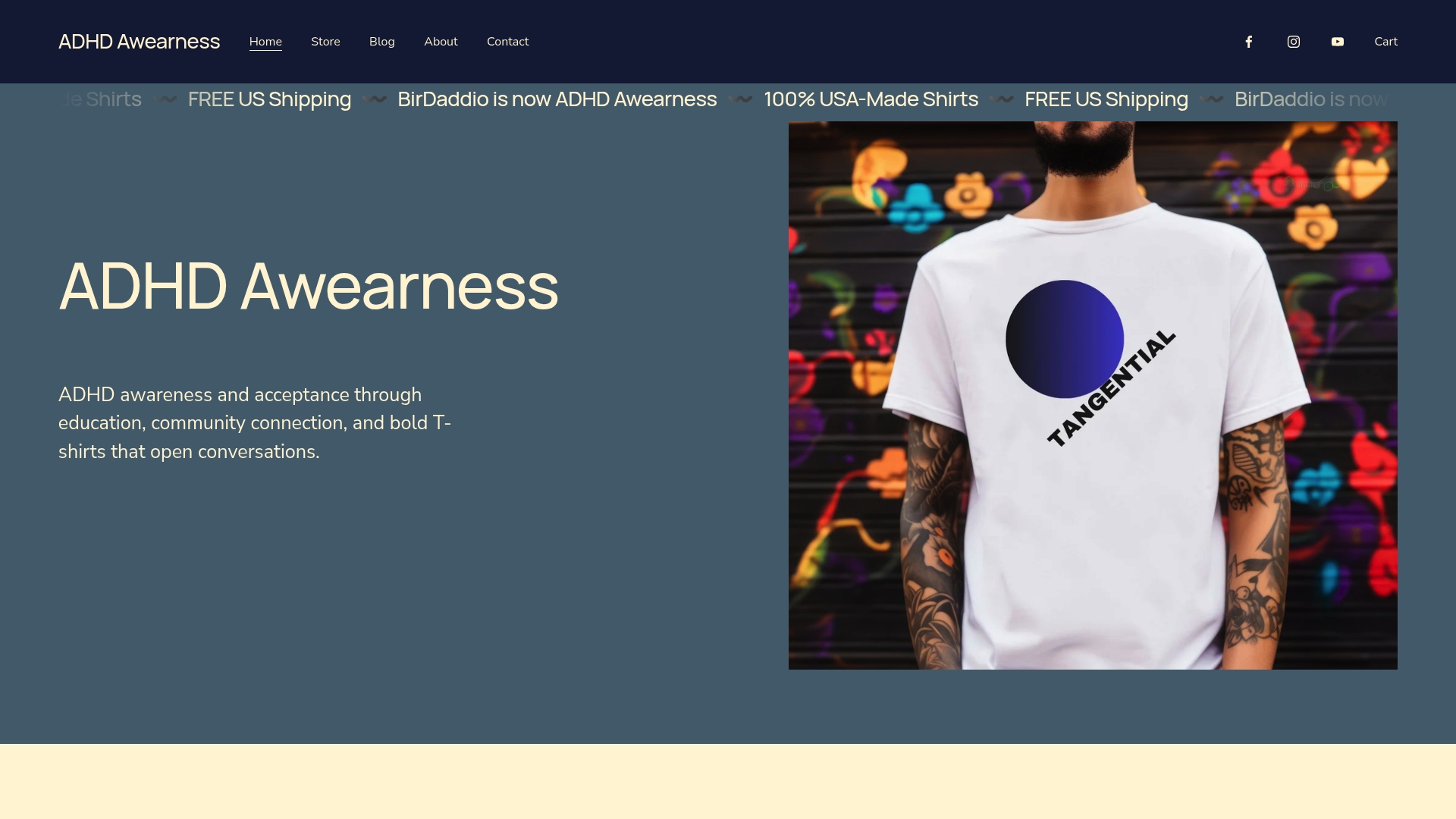
If you are looking for a way to show up for the ADHD community beyond the screen, the ADHD Awearness store is a meaningful place to start. The Abilities Collection highlights ADHD strengths through bold, conversation-starting designs made to be seen. Every piece you wear becomes a small act of visibility for a community that deserves to be understood.
FAQ
What are the main types of ADHD online communities?
The main types are informational, emotional support, social and identity-focused, structured peer support, and multimedia communities. Each type serves a different need, from knowledge sharing to scheduled facilitated sessions.
What is ADHD peer support?
ADHD peer support is a structured or informal connection between people who share the lived experience of ADHD. It provides validation, shared coping strategies, and a sense of belonging that professional therapy alone does not always offer.
How do I find the right online ADHD support community?
Evaluate groups by checking moderation activity, reading the community rules, and spending at least one week observing before posting. Match the group's focus to your current life stage and support needs.
Are structured peer support groups better than open forums?
Structured groups offer accountability and focused conversation that open forums cannot replicate, but open forums provide flexibility and scale. The best approach is using both types for different purposes.
Can TikTok and Instagram replace a real ADHD support group?
Short-form video platforms provide awareness and relatability but carry significant risks of misinformation and algorithm-driven emotional fatigue. They complement but do not replace moderated communities or structured peer support.