
TL;DR:
- Most individuals with ADHD experience at least one co-occurring mental health condition, primarily anxiety or depression. These overlapping disorders often complicate diagnosis and treatment, especially in women and adolescents, leading to persistent emotional and cognitive challenges. Effective care emphasizes integrated behavioral and pharmacological strategies, addressing both conditions simultaneously for better outcomes.
ADHD is defined as a neurodevelopmental disorder that disrupts attention regulation, impulse control, and executive function. What makes it particularly complex is how rarely it travels alone. The ADHD and mental health overlap is one of the most significant and underrecognized patterns in psychiatric care today. Up to 80% of individuals with ADHD also experience at least one other mental health condition, most commonly anxiety or depression. That figure is not a footnote. It means that for most people living with ADHD, the diagnosis is only part of the picture.
Which mental health conditions most commonly overlap with ADHD?
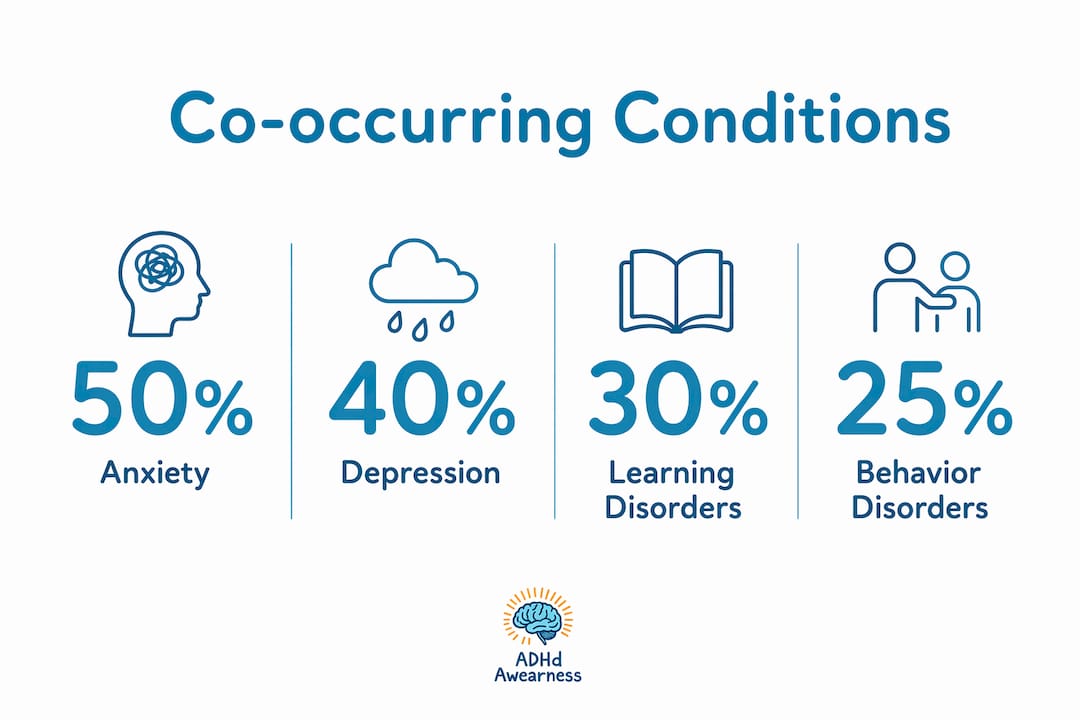
The co-occurrence of ADHD with other psychiatric conditions is the rule, not the exception. Approximately 66% of people with ADHD have at least one co-occurring mental health condition, and 50% experience anxiety disorders specifically. These are not mild inconveniences layered on top of ADHD. They are full clinical diagnoses that interact with ADHD symptoms in ways that complicate both recognition and treatment.
The most common co-occurring ADHD disorders include the following:
- Anxiety disorders (generalized anxiety, social anxiety, panic disorder): present in roughly 50% of adults with ADHD
- Major depressive disorder: more strongly linked with ADHD than with autism in large-scale adult population studies
- Bipolar disorder: shares mood dysregulation features with ADHD, making differential diagnosis difficult
- Substance use disorders: adults with untreated ADHD use substances at higher rates as a form of self-regulation
- Personality disorders: borderline personality disorder in particular shares emotional dysregulation features with ADHD
Age and gender shape these patterns significantly. In youth with ADHD, about 25% have anxiety disorders and 40% experience depressive episodes. Adolescent girls face additional stress tied to peer relationships, which amplifies mental health risk beyond what boys with ADHD typically experience. That gender gap matters because girls are already more likely to be diagnosed later, meaning their co-occurring conditions often go unaddressed longer.
| Co-occurring condition | Estimated prevalence in ADHD | Key risk group |
|---|---|---|
| Anxiety disorders | ~50% of adults | All ages, especially females |
| Depression | ~40% of adolescents | Teens and adults |
| Bipolar disorder | Variable, often misdiagnosed | Adults |
| Substance use disorder | Elevated in untreated ADHD | Adults |
| Personality disorders | Moderate overlap | Adults, especially females |
How do ADHD symptoms overlap or differ from anxiety and depression?
ADHD and anxiety share a frustrating number of surface-level symptoms. Both produce distractibility, restlessness, and difficulty concentrating. Both can look like someone who is scattered, avoidant, or emotionally reactive. ADHD and anxiety share symptoms like distractibility and restlessness so closely that misdiagnosis is common when clinicians do not assess executive dysfunction directly.

The difference lies in the driver of those symptoms. In anxiety, distraction comes from worry. The brain is preoccupied with threat, real or imagined. In ADHD, distraction comes from dysregulation of the dopamine system. The brain struggles to sustain attention regardless of emotional state. Treating anxiety without addressing the underlying executive dysfunction leaves the core problem untouched.
Diagnostic overshadowing makes this worse. When anxiety or depression symptoms dominate the clinical picture, clinicians can overlook ADHD entirely, leading to treatment plans that address the secondary condition while the primary one goes unmanaged. This is especially common in women, who are more likely to present with internalizing symptoms like worry and low mood rather than the hyperactivity that triggers ADHD screening.
Key symptom distinctions worth knowing:
- Restlessness in ADHD feels physical and constant, not tied to a specific worry
- Restlessness in anxiety is usually linked to a specific fear or anticipatory dread
- Emotional dysregulation in ADHD is fast, intense, and often passes quickly
- Emotional dysregulation in depression tends to be persistent, low-grade, and pervasive
- Concentration problems in ADHD occur even for neutral or positive tasks
- Concentration problems in anxiety or depression are often worse during high-stress periods
Pro Tip: If you or someone you know has been treated for anxiety or depression for years without meaningful improvement, ask a clinician specifically about executive function assessment. Untreated ADHD is one of the most common reasons mood and anxiety treatments underperform.
What are the mental health effects of untreated ADHD?
Untreated ADHD does not stay contained. Over time, unmanaged symptoms create a cascade of secondary mental health effects that can feel indistinguishable from standalone psychiatric disorders. ADHD cognitive overload triggers a biological stress response that worsens emotional regulation and feeds cycles of burnout and mood disturbance. Think of it like running a computer with too many programs open simultaneously. Eventually, the whole system slows down and crashes.
The mental health effects of poorly managed ADHD follow a recognizable pattern:
- Chronic low self-esteem: Years of missed deadlines, forgotten tasks, and social missteps accumulate into a narrative of failure. This is not a character flaw. It is the predictable result of an unsupported neurological difference.
- Burnout: The constant effort required to compensate for executive dysfunction drains mental and physical reserves. Many adults with ADHD describe periods of complete shutdown that look like depression but are rooted in exhaustion.
- Sleep disturbances: ADHD disrupts the brain's ability to wind down, creating a cycle where poor sleep worsens attention and emotional regulation the next day.
- Anxiety as a secondary condition: When ADHD goes unrecognized, people develop anxiety as a coping mechanism, using worry and hypervigilance to compensate for forgetfulness and impulsivity.
- Depression: Co-occurring psychiatric conditions in ADHD increase risks of severe illness and hospitalizations, particularly in females.
Masking compounds all of this. Masking ADHD symptoms drains energy, worsens exhaustion, and contributes directly to anxiety and depression. When you spend years performing neurotypicality, you lose touch with your actual identity. That disconnection is its own form of psychological harm.
"The most exhausting thing about ADHD is not the disorder itself. It is the performance of not having it."
What treatment options work for ADHD and co-occurring conditions?
Effective treatment for the ADHD and mental health overlap requires addressing both conditions simultaneously, not sequentially. Treating anxiety first and ADHD second, or vice versa, typically produces incomplete results. Integrated care is the standard that research supports.
The most effective approaches combine behavioral and pharmacological strategies:
- Stimulant medications (amphetamine salts, methylphenidate): remain the first-line pharmacological treatment for ADHD and often reduce anxiety and mood symptoms indirectly by improving executive function
- Non-stimulant medications (atomoxetine, viloxazine): useful when anxiety is severe or stimulants are not tolerated
- Cognitive Behavioral Therapy (CBT): directly targets the thought patterns and avoidance behaviors that drive anxiety and depression in people with ADHD
- Dialectical Behavior Therapy (DBT): particularly effective for emotional dysregulation, which sits at the intersection of ADHD and mood disorders
- Mindfulness-based interventions: reduce cognitive overload and improve present-moment awareness without medication
Low self-esteem and parental mental health significantly influence mental health outcomes in adolescents with ADHD. This means treatment cannot focus on the individual alone. Family systems, school environments, and peer relationships all shape how ADHD and co-occurring conditions develop and resolve.
Community support is not a soft add-on. Peer groups, ADHD coaches, and advocacy organizations provide the kind of consistent, lived-experience validation that clinical settings often cannot. Connecting with others who share your experience reduces isolation and builds the self-understanding that makes every other intervention more effective. For broader support options, the mental health resources guide from Uniqueli MADE Co covers nonprofit and community-based options worth exploring.
Pro Tip: When seeking a therapist, ask directly whether they have experience treating ADHD alongside anxiety or depression. A therapist who treats ADHD as a behavioral problem rather than a neurological one will likely miss the root causes driving your symptoms.
If social anxiety at work is part of your experience, managing workplace anxiety with a disability lens offers practical strategies that apply directly to the ADHD context.
What I have learned from watching people navigate this overlap
I have spent years watching people arrive at ADHD diagnoses after decades of being treated for anxiety or depression that never fully resolved. The pattern is consistent enough to be predictable. Someone gets diagnosed with generalized anxiety at 22. They try three different antidepressants over ten years. They do CBT. Things improve slightly but never enough. Then, at 35, someone finally assesses their executive function and finds ADHD underneath everything else.
The frustration in those conversations is real. But so is the relief. Having a name for what is actually happening changes everything. It reframes years of perceived failure as a neurological reality that was simply never identified correctly.
What I think gets missed most often is the self-esteem piece. Clinicians focus on symptoms and medications. They underinvest in helping people rebuild the story they tell about themselves. Someone who has spent 20 years believing they are lazy, careless, or broken does not automatically update that belief when they get a diagnosis. That work takes time, support, and often a community of people who genuinely understand.
The ADHD and mental health overlap is not a complication. It is the norm. Treating it as an exception leads to fragmented care and incomplete outcomes. The ADHD Awearness blog covers many of these intersections in ways that are grounded in research and written for real people, not just clinicians.
— Jason
How ADHD Awearness supports your mental health understanding

ADHD Awearness exists because understanding ADHD should not require a medical degree or years of misdiagnosis. The platform offers blogs, videos, and podcasts that translate research into language that actually makes sense for the people living it. Every piece of content is built around reducing stigma and building genuine understanding of how ADHD intersects with anxiety, depression, and emotional wellbeing.
Beyond education, ADHD Awearness produces 100% USA-made apparel that funds ADHD-focused nonprofits with every sale. Wearing that message into the world starts conversations that matter. If you want to go deeper on ADHD awareness and find a community that gets it, explore ADHD Awearness and see what resonates. You can also browse the awareness apparel store to support the cause directly.
FAQ
What percentage of people with ADHD have a co-occurring mental health condition?
Up to 80% of individuals with ADHD experience at least one co-occurring mental health disorder, with anxiety and depression being the most common. This makes co-occurring conditions the norm rather than the exception in ADHD diagnoses.
Can ADHD be mistaken for anxiety or depression?
Yes. ADHD shares symptoms like distractibility, restlessness, and emotional dysregulation with both anxiety and depression, making misdiagnosis common. Assessing executive dysfunction is the key step that separates ADHD from anxiety-driven or mood-driven presentations.
Does untreated ADHD make anxiety and depression worse?
Untreated ADHD creates cognitive overload and chronic stress that directly worsen anxiety and depression over time. Masking ADHD symptoms adds an additional layer of exhaustion that accelerates burnout and mood deterioration.
What is the most effective treatment for ADHD with co-occurring anxiety?
Combined treatment using stimulant or non-stimulant medication alongside Cognitive Behavioral Therapy or Dialectical Behavior Therapy produces the strongest outcomes. Treating only one condition while ignoring the other consistently leads to incomplete improvement.
Are females with ADHD at higher mental health risk than males?
Research shows that psychiatric comorbidities in ADHD are more pronounced in females, with higher rates of severe illness and hospitalization. Adolescent girls with ADHD also face additional social stressors that amplify depression and anxiety risk compared to their male peers.